Dry vs. Wet Grinding of Stone: A Professional Guide to Achieving Exceptional Polishing Results
Grinding is first and foremost a decisive step in stone processing and restoration, as it changes the quality of its finish. There is a crucial decision that professionals have to make: dry grinding or wet grinding? These two processes are not as simple as using water and not using water, there are far reaching effects on grinding tools, the stone itself, the final gloss level and wet dry working environments.
Known as a global leader of innovated polishing tools, Z-LION will break down the differences between the two processes, and then offer professional application suggestions to make the right decision according to your material condition.
Key Differences: Dry Grinding vs. Wet Grinding
The presence or absence of water is the most obvious distinction between the two, but it underpins the entire grinding and polishing system. From the type of diamond tools required to the thermodynamic effects on the stone, and from the quality of the final gloss to the safety of the work environment, every aspect is fundamentally different as a result. A wise decision stems from a deep understanding of these core differences.
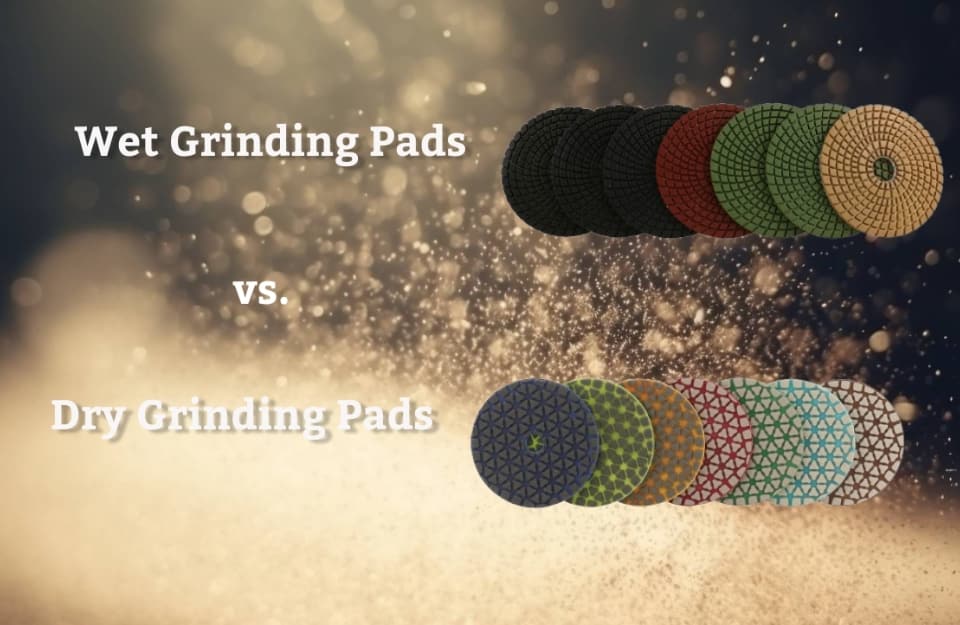
Completely Different Requirements for Grinding Tools
Stone grinding is achieved through high-speed friction between the grinding disc and the stone surface. This process generates a significant amount of heat instantly.
Wet Grinding: The addition of water plays a critical role in cooling and lubrication, rapidly dissipating heat and effectively protecting both the grinding disc and the stone. Therefore, the requirements for heat resistance are relatively low for wet grinding discs.
Dry Grinding: Without water cooling, all frictional heat is concentrated at the contact surface between the grinding disc and the stone. This poses a significant challenge to the grinding disc. If standard wet grinding discs are used for dry grinding, their resin bond may soften, deform, or even burn out due to high temperatures, resulting in reduced disc lifespan and decreased grinding efficiency.
Z-LION’s Solution: Z-LION’s specialized dry grinding discs feature an innovative formulation that utilizes high-quality, heat-resistant resin binders and premium-grade diamond particles. This ensures that the discs maintain a stable physical form and sharp cutting power even under harsh dry grinding conditions. Our most versatile grinding discs, such as our universal polishing pads, are designed for dry and wet use, giving customers the ultimate flexibility and convenience.
Impact on Stone Surfaces and Final Gloss
Heat is a key factor affecting the gloss of stone.
Advantages of wet grinding: Thanks to the effective cooling provided by water, wet grinding minimizes heat damage to the stone’s crystalline structure. This is particularly crucial for heat-sensitive stones like marble (primarily composed of calcium carbonate, CaCO₃), where excessive heat can cause surface “burns” and trigger “calcination”-like chemical reactions, leading to loss of luster, powdering, or even fracturing.The gloss achieved through wet polishing is typically softer, more translucent, and exhibits a “crystal-clear” moist texture. For dark-colored stones (such as black granite) or translucent jade, wet polishing effectively prevents whitening, restoring their most natural color and texture.
Challenges of Dry Polishing: While the high temperatures generated by dry polishing can help achieve a quick gloss at certain stages, they may also cause microscopic thermal damage to the stone. The resulting gloss may appear somewhat dry and glaring, lacking the warmth and depth of wet polishing. On light-colored stones such as beige, this difference may not be especially noticeable, whereas on dark stones it would be particularly pronounced.
Work Environment and Operator Safety
Dry Polishing: Generates a large amount of dust. These fine stone particles not only pollute the environment and are difficult to clean up, but they can also be absorbed into the stone’s micro-pores, where they may later absorb moisture and cause staining. More importantly, long-term exposure to dust poses a serious health risk to operators.
Wet Grinding: Produces slurry. Although it still requires disposal, slurry is easier to collect and control and does not disperse into the air, thereby creating a cleaner and safer work environment.
Practical Application: How to Choose the Right Grinding Method Based on Working Conditions
The choice between dry and wet grinding depends on the specific construction phase, stone type, and work environment.
Scenarios Where Wet Grinding Is Recommended
Floor Renovation and Leveling: For large-scale floor renovations, wet grinding is the preferred method for the transition from coarse to medium grinding. It efficiently levels the surface, protects the stone, extends the life of grinding discs, and keeps a clean environment.
Treatment of Dark or Heat-Sensitive Stone: When processing black, dark-stained, jade-like, or heat-sensitive marble surfaces, a predominance use of wet grinding through any process provides ideal color saturation and gloss.
Locations with strict environmental requirements: Wet grinding is the obvious choice for situations such as occupied hotels, shopping malls or residential buildings. Because the environment has strict dust control rules.
Recommended Scenarios for Dry or Semi-Dry Polishing
Surface Preparation Before Sealing: Before applying a protective sealant, the stone must be clean and dry. If the stone has never been sealed or requires removal of an old crystalline layer, using dry grinding to open the stone’s surface can prevent water absorption caused by wet grinding, thereby significantly reducing the drying time required.
Polishing and Gloss Enhancement Stage: This is a highly practical professional technique. After wet grinding to 1000-grit or higher, switch to semi-dry grinding (with minimal water) or fully dry grinding. At this stage, the floor already has some moisture; the heat generated by dry grinding helps accelerate water evaporation while rapidly enhancing the stone’s surface gloss, saving valuable time for subsequent crystallization or glazing processes.
Working in Special Areas:
Wall Grinding: Since walls do not meet the conditions for wet grinding, dry grinding must be used.
Edge and Corner Treatment: For wall edges and corners inaccessible to large equipment, use a handheld polisher with dry grinding discs for finishing work, which offers greater operational convenience.
Countertop and Trim Repair: For small-area countertops, irregularly shaped trims, or localized defect repairs, dry grinding offers greater flexibility and control.
Z-LION: Providing Comprehensive Solutions for Both Dry and Wet Grinding
Whether you choose dry or wet grinding, the right tools are the key to success.
For dry grinding: We offer professional dry grinding discs that are heat-resistant and long-lasting, ensuring efficient and stable performance even in water-free conditions.
For wet grinding: Our wet grinding disc series features high sharpness and excellent polishing results, helping you achieve a smooth, translucent, top-tier finish.
Versatile Solutions: Our innovative universal grinding discs are suitable for both dry and wet grinding, making them an indispensable all-rounder in your toolkit.
Choosing Z-LION means choosing efficient, and high-performance polishing solutions. Please visit our official website and contact us to receive product recommendations and technical support to your projects.
-
Online service
-
Official wechat account

-
QQ:844389055
-
E-mail:VIP@zliontools.com
Online Message
Please feel free to give your inquiry in the form below. We will reply you in 24 hours.