What Is a Diamond Core Drill Bit and How to Use It?
In the drilling industry, diamond coring bits are widely used due to their high efficiency and ability to penetrate a variety of materials. These specialized tools are essential for professionals who demand precision and durability in drilling operations.
What Is a Core Drill?
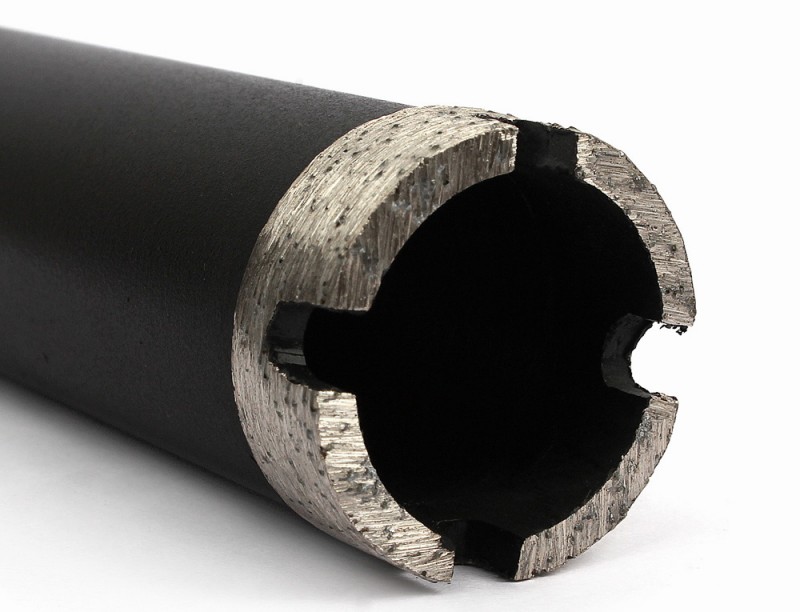
A core drill, also known as a hollow drill bit, is specifically designed to drill cylindrical holes in various materials, including concrete, stone, brick, and asphalt. Core drill bits require the use of a specialized drilling rig. Their unique design allows them to extract cylindrical rock cores from the material, leaving a clean hole inside.
Diamond cutting tips embedded in core drill bits play a crucial role in their cutting and sharpening capabilities. Diamond, one of the hardest known materials, provides the necessary sharpness and durability to efficiently penetrate hard surfaces. This reduces drilling time and tool wear, making diamond core drill bits a cost-effective choice in many applications.
Types of Coring Drill Bits
Based on the different cooling methods, diamond core drill bits can be divided into two main categories: wet core drill bits and dry core drill bits.
Wet core drilling:
Wet coring rigs are designed for water cooling. Water serves multiple purposes: it cools the drill bit during operation, reduces friction, and helps remove powder and debris generated during drilling. This cooling effect not only extends the life of the drill bit but also improves borehole quality.
Wet drilling is particularly advantageous when machining hard materials because it minimizes the risk of overheating and damage to the drill bit and workpiece.
Dry coring drill:
Dry coring drills can operate without water, making them suitable for situations where water is inconvenient or unsuitable. However, this method generates a large amount of dust and debris, creating a harsh working environment.
When using a dry coring drill, a mask must be worn to prevent inhalation of dust particles. Appropriate ventilation and dust control measures should also be implemented to ensure a safe working environment.
Compatibility and size
Depending on the drilling rig model used, diamond core drill bits can be equipped with a variety of bushing sizes, including M14, 5/8”-11”, 1/2” pneumatic, round shank, and hexagonal shank. This versatility makes them compatible with a variety of equipment, making them a flexible choice for different application scenarios.
Drill bit sizes range from 4 mm to 100 mm. Smaller drill bits typically employ a crown-shaped design, which provides efficient cutting forces. Larger core drill bits generally use a toothed design to improve cutting performance and durability.
How to Use a Coring Bit?
Step 1: Safety first
Safety is paramount before commencing any drilling operations. The following are essential precautions:
Wear appropriate protective equipment: During drilling, always wear gloves and a mask to protect yourself from dust and debris. It is also recommended to wear goggles to protect your eyes from flying particles.
Inspect equipment: Before use, ensure that the core drilling rig and all related equipment are in good working order.
Step 2: Install the coring drill bit onto the drilling machine.
Installation: Securely install the core drill bit onto the drilling rig. Ensure it is installed correctly to the machine’s specifications, which may include M14, 5/8”-11”, 1/2” gas canisters, round shank, or hexagonal shank connectors.
Step 3: Determine the feed rate
Feed rate: Feed rate is a key factor affecting drilling performance. Typically, a feed rate range of 0.08 to 0.12 mm/revolution or 0.6 to 1.0 mm/second is recommended. This rate will vary depending on the material being drilled and the specific application.
Importance of feed rate: Feed rate affects chip formation and removal. A suitable feed rate ensures efficient drilling and prevents the drill bit from overheating or being damaged.
Step 4: Positioning
Marking drilling locations: Accurately mark the locations where drilling is needed. Use circles to indicate the exact locations, ensuring the circle size matches the drill bit size. The accuracy of the markings is crucial for obtaining the desired hole positions.
Step 5: Begin drilling
Adjust speed: Before starting, please adjust the drill press to a speed suitable for the material you are processing.
Prepare the ground: Ensure the bottom of the drilling area is clean and free of debris.
Powering on: First turn on the magnetic base switch, then turn on the motor switch. If using a wet core drill, also turn on the coolant switch.
Start drilling: When the drill bit contacts the workpiece surface, feed slowly to allow it to penetrate the material. After drilling approximately 1-2 mm, increase the feed rate to normal while maintaining constant pressure. This method helps maintain a smooth drilling process.
Step 6: Drilling completed
Close: Once the desired depth is reached, turn off the motor and wait for the spindle to stop rotating completely.
Cleaning: Use a hook or similar tool to remove metal filings or debris tangled in the drill bit. This step is crucial for maintaining the drill bit and ensuring it is ready for the next operation.
Continue work: After cleaning, you can continue with other drilling operations or switch to other locations as needed.
What Are the Standards for a High-Quality Coring Drill?
In the drilling industry, especially in applications involving hard materials such as stone, concrete, and ceramics, the quality of core drill bits is paramount. High-quality core drill bits not only improve efficiency but also ensure safety and accuracy during operations.
Key standards for high-quality coring rigs
Performance and cutting efficiency:
A high-quality coring drill should offer superior performance and rapid, smooth drilling. This means the drill bit should be able to cut material efficiently without requiring excessive force. The cutting force of the drill bit is crucial; it should be able to penetrate hard surfaces with minimal resistance.
The cutting edge of a drill bit must be sharp and well-designed to efficiently remove material. A high-quality core drill produces clean holes, minimizing chipping or edge damage, thus ensuring professional machining results.
Cleanroom production:
One of the hallmarks of a high-quality core drill is its ability to produce clean holes. This means that no debris or fragments should remain at the edge of the hole after drilling. Clean holes are crucial for applications requiring extremely high precision, such as construction and stone processing.
The drill bit should be designed to facilitate effective chip removal, prevent clogging, and ensure a smooth and efficient drilling process.
Vibration control:
A high-quality coring rig should operate with minimal vibration. Excessive vibration can lead to decreased drilling accuracy and cause wear on the drill bit and the rig itself.
Vibration control is crucial for ensuring operator comfort and safety, as well as achieving precise drilling results. Designing a well-balanced drill bit helps reduce vibration during operation.
Lifespan and durability:
The lifespan of a core drill is a key factor determining its quality. A high-quality core drill should withstand prolonged use without significant performance degradation. This means it should be made of high-quality materials capable of withstanding the harsh challenges of drilling hard surfaces.
Operators should expect the coring rig to complete the number of boreholes specified by the manufacturer. A longer service life not only reduces replacement frequency but also contributes to improved cost-effectiveness in the long run.
Compatibility and versatility:
High-quality core drill bits should be compatible with a variety of drilling machines and equipment. This includes having the appropriate shank diameter, such as M14, 5/8”-11” or 1/2” pneumatic drill bits, to ensure easy mounting on different equipment.
Versatility of application is also important; a good coring drill should be able to effectively drill through a variety of materials, including concrete, stone, ceramics and composites.
-
Online service
-
Official wechat account

-
QQ:844389055
-
E-mail:VIP@zliontools.com
Online Message
Please feel free to give your inquiry in the form below. We will reply you in 24 hours.