- Application
- For Concrete For Stone For Dekton/Ceramic For Glass Others
- Hot Products
-
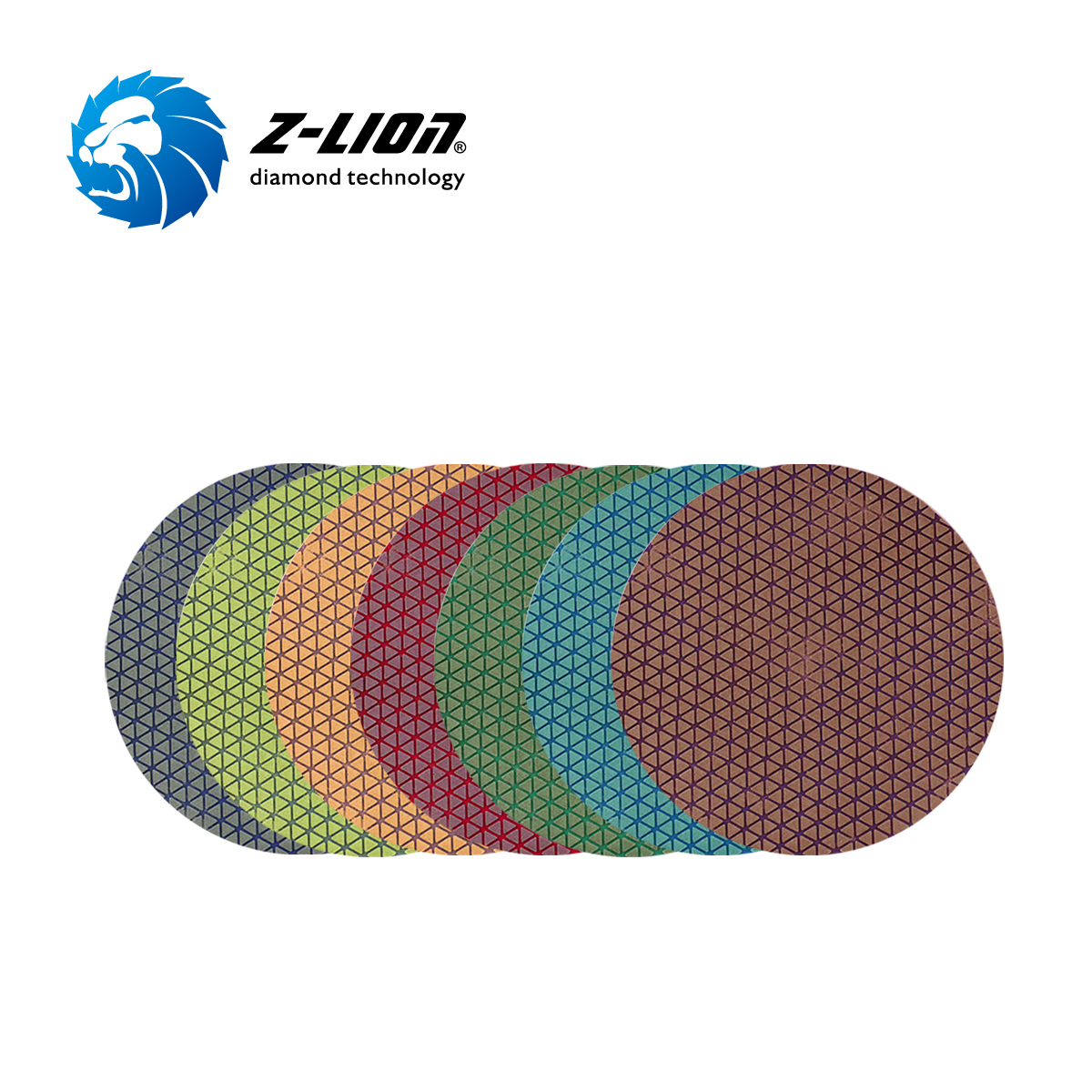
ZL-123W Resin Flexible Hand Sandpaper Diamond Sanding Sheets for Hard Alloy Surface and Edge Grinding
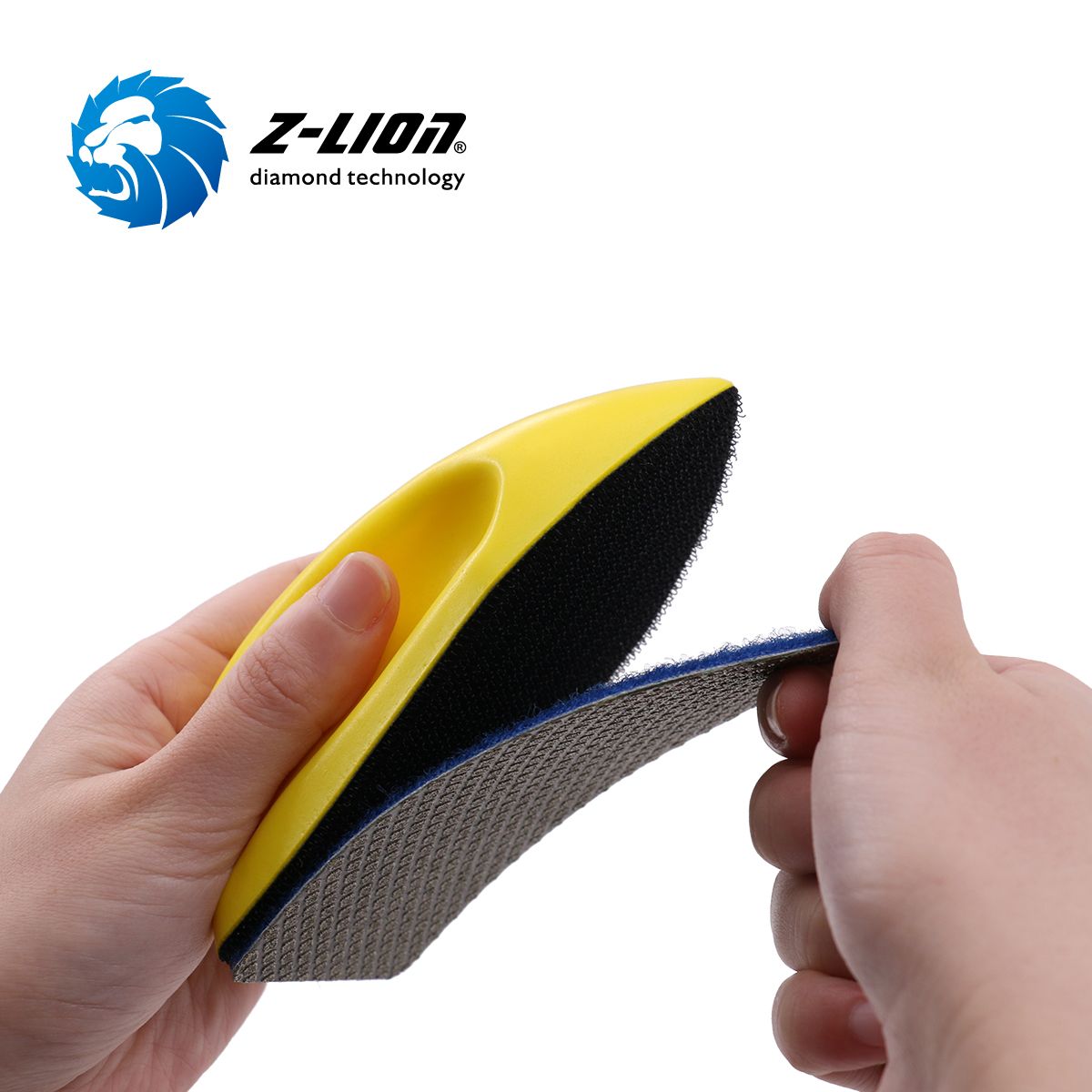
ZL-37HSB Flexible Best Hand Sanding Block for Hard Metal & Plastics Surface Grinding and Trimming
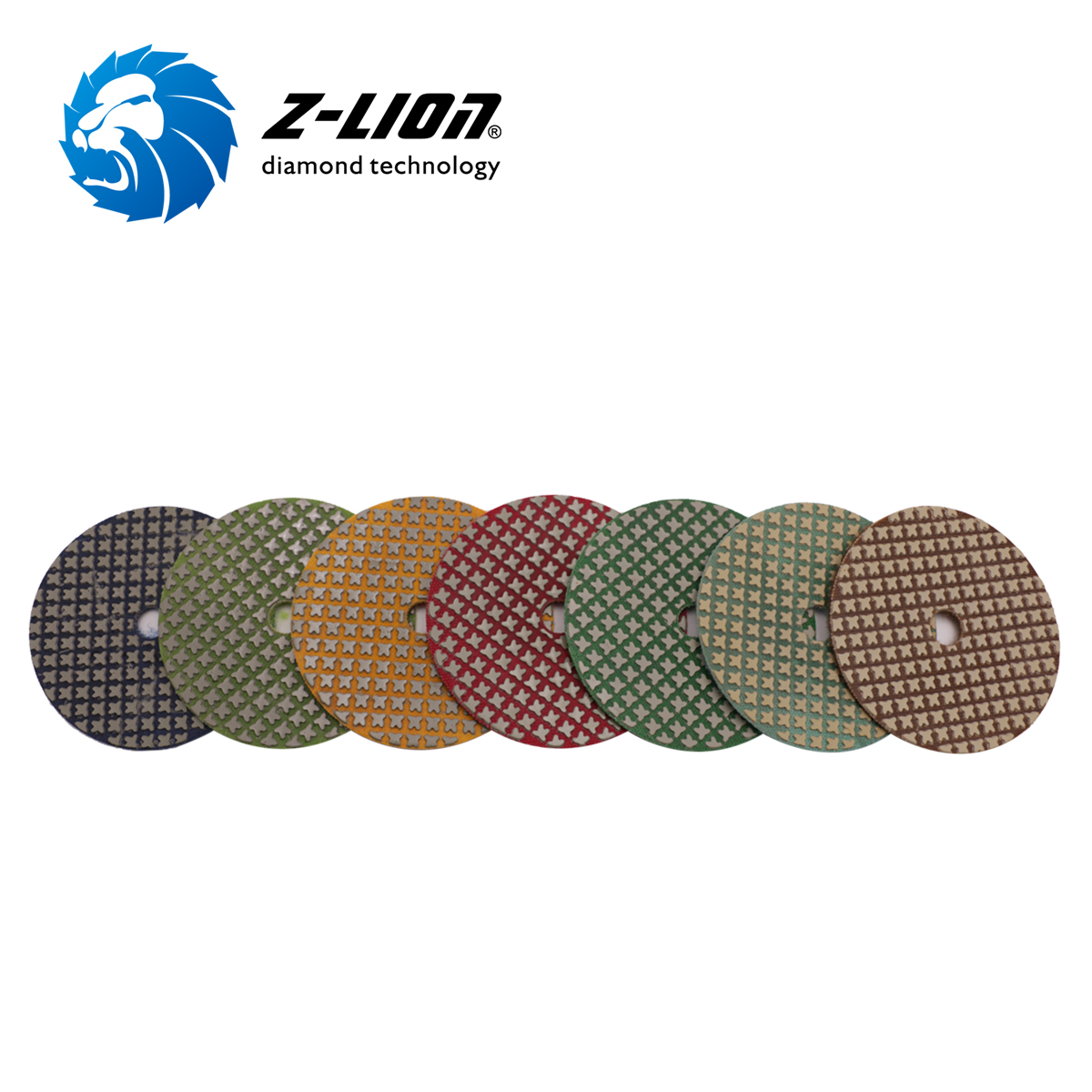
ZL-123T 4 inch Diamond Dry Polishing Pad for Stone Marble Polishing
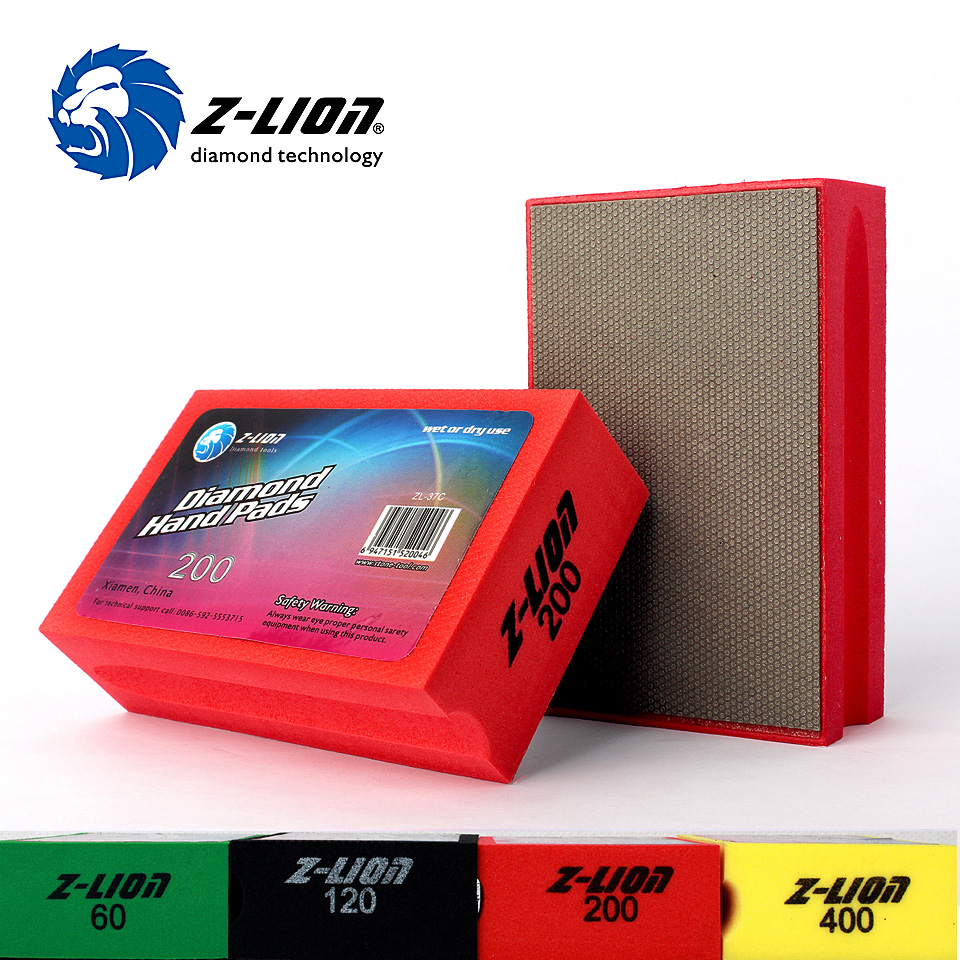
ZL-37C Electroplated Diamond Hand Polishing Pad for Ceramic Stone Glass Edge Polishing
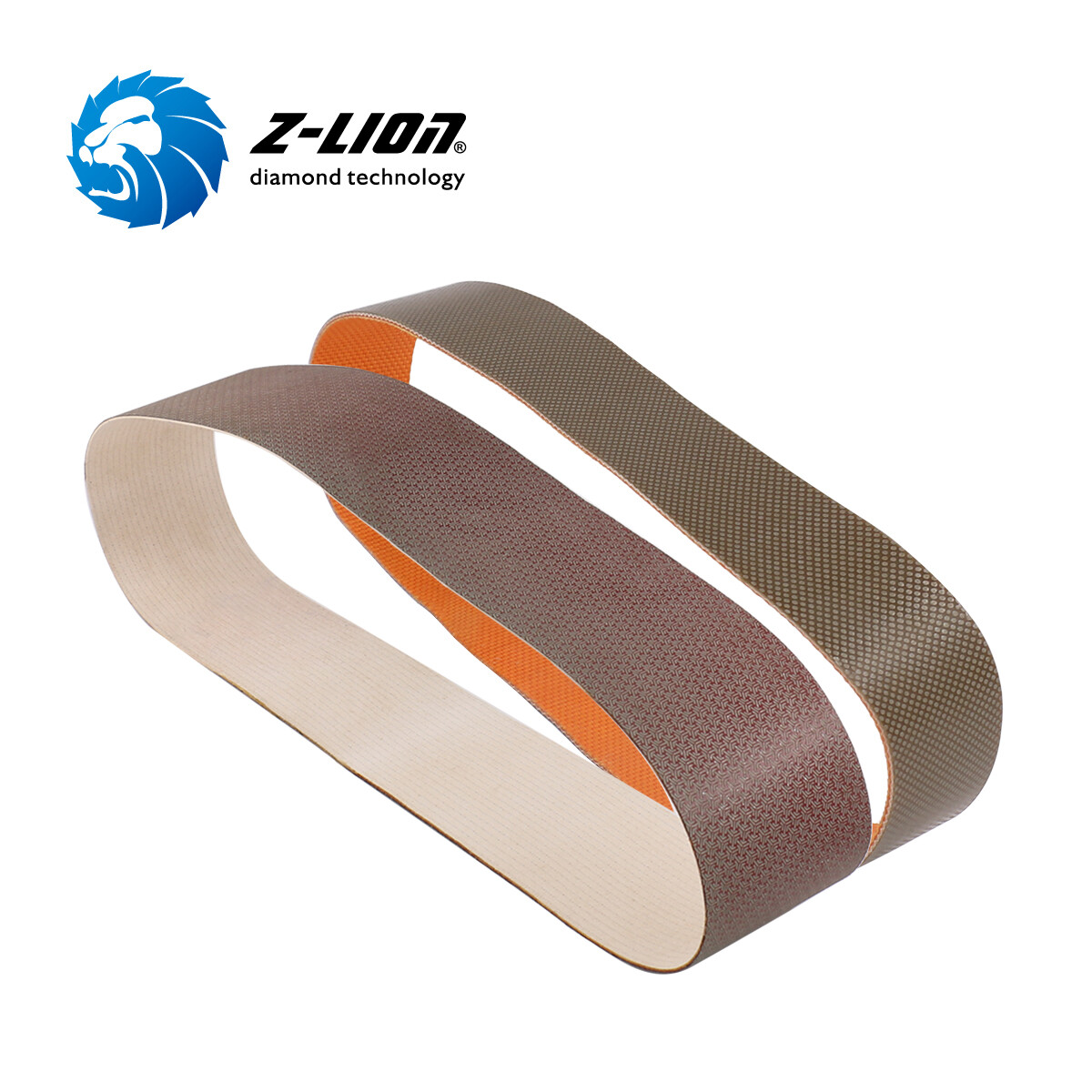
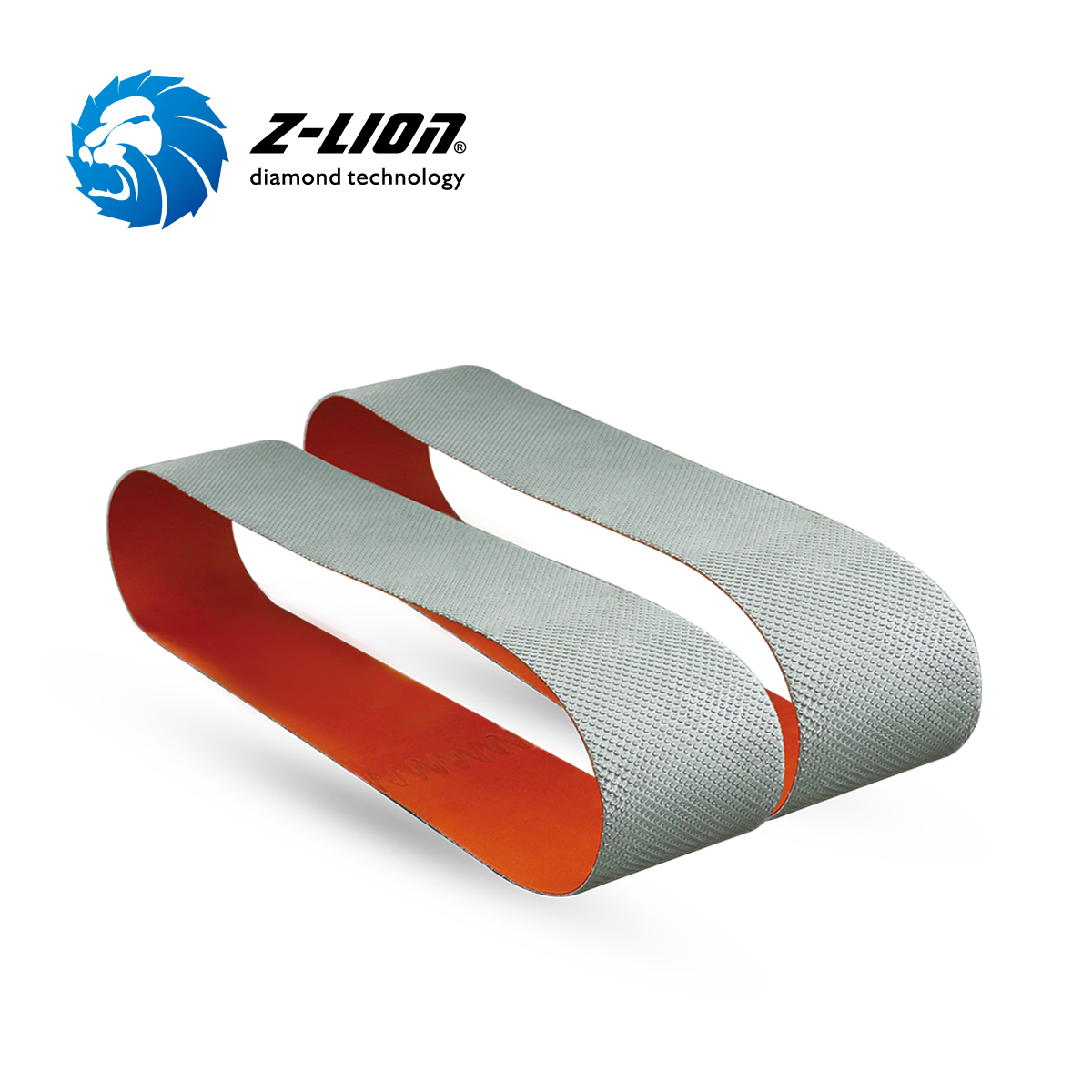
ZL-EB Diamond Electroplated Sanding Belt for Glass Automatic Processing Machines
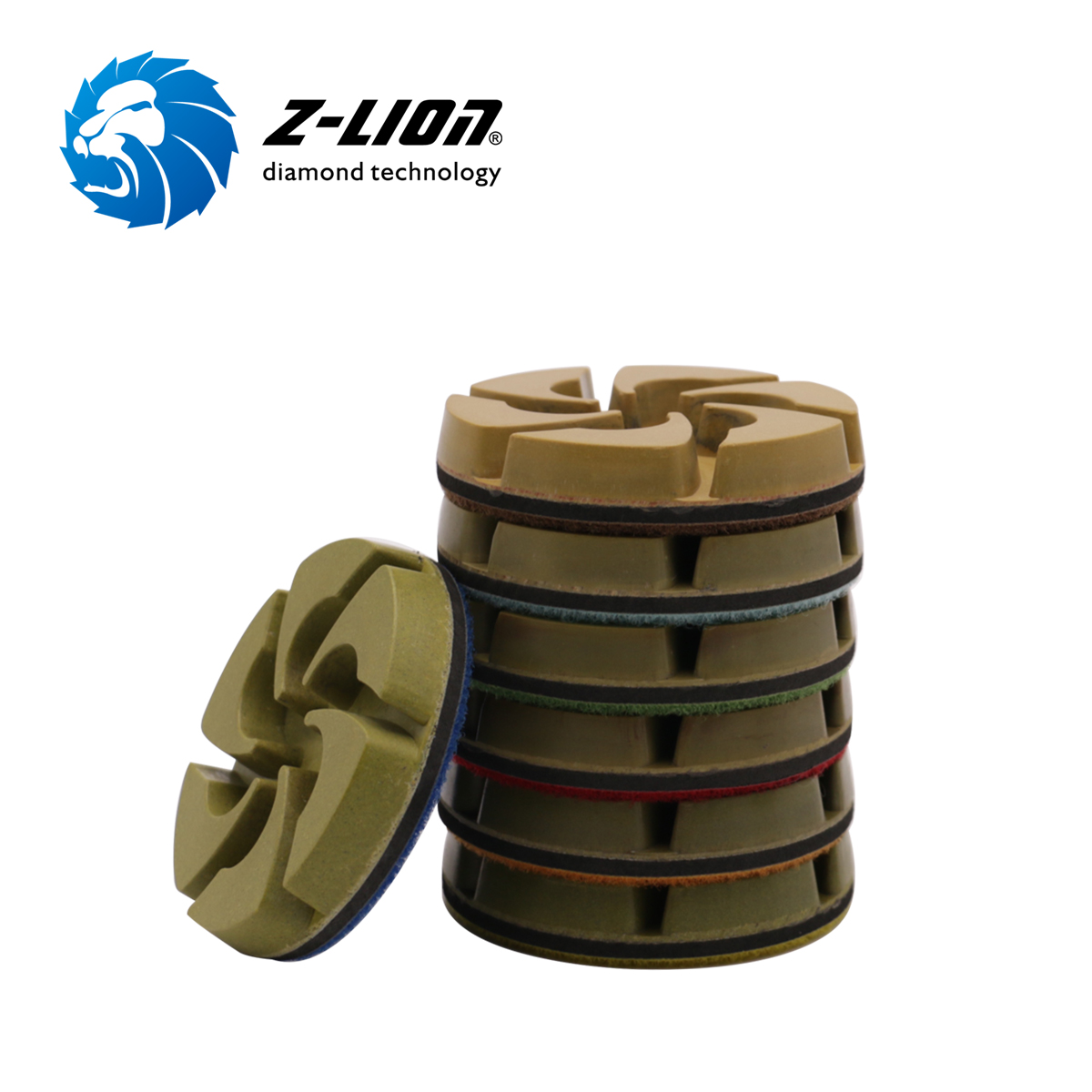
ZL-16KP Diamond Resin Bond Wet Polishing Pads for Concrete Grinding
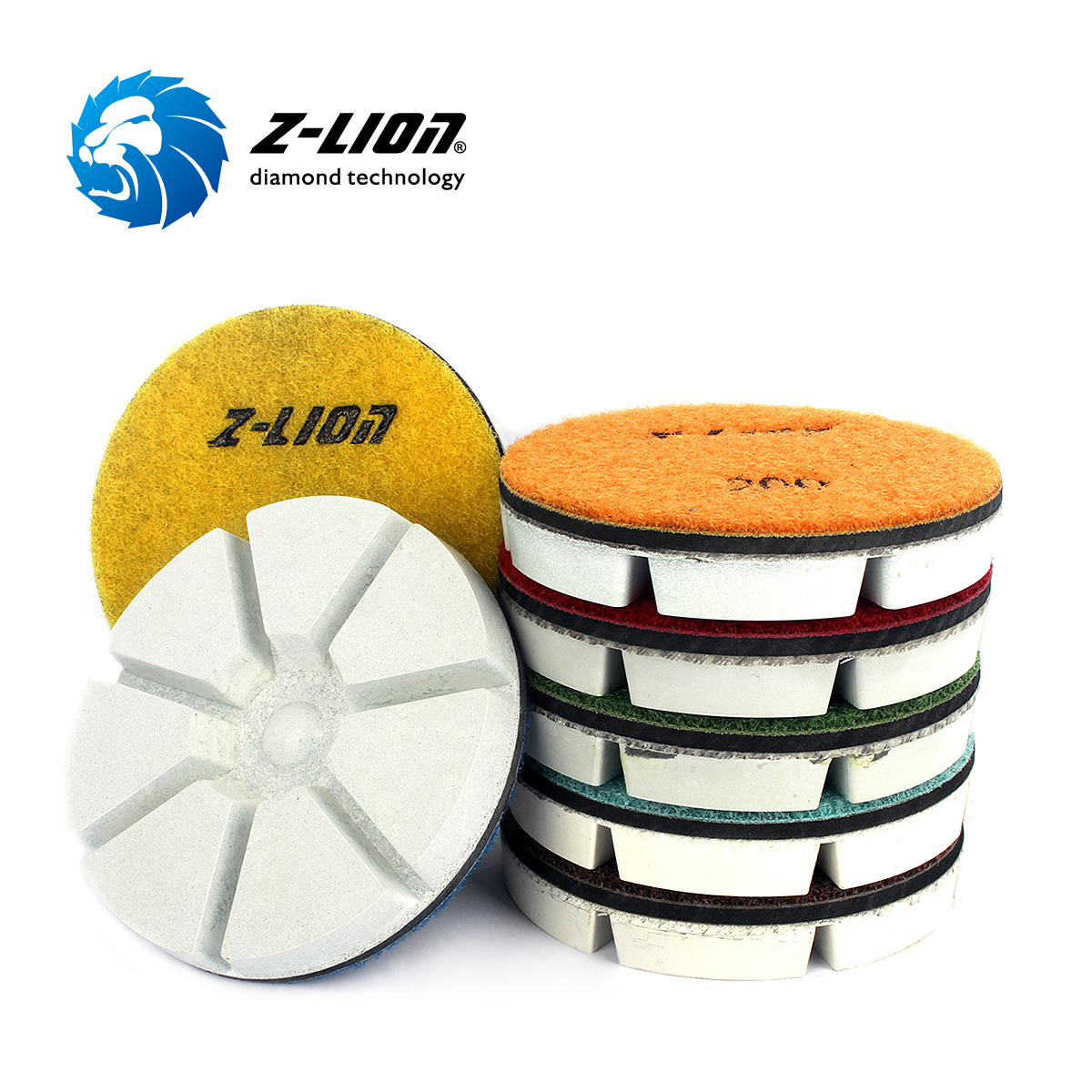
ZL-16AD Resin Bonded Floor Polishing Pads-Dry Use
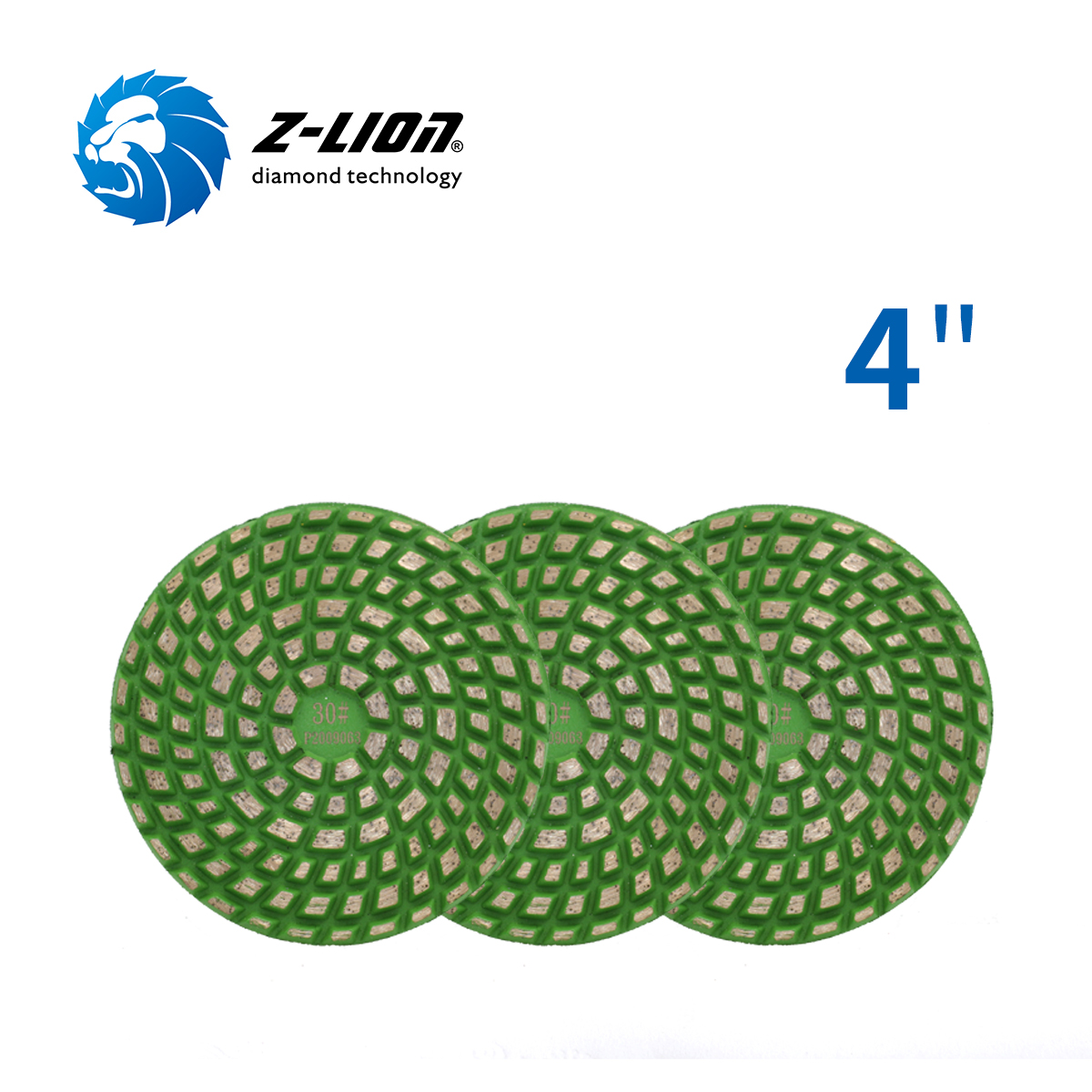
ZL-123M Metal Bond Floor Polishing Pad
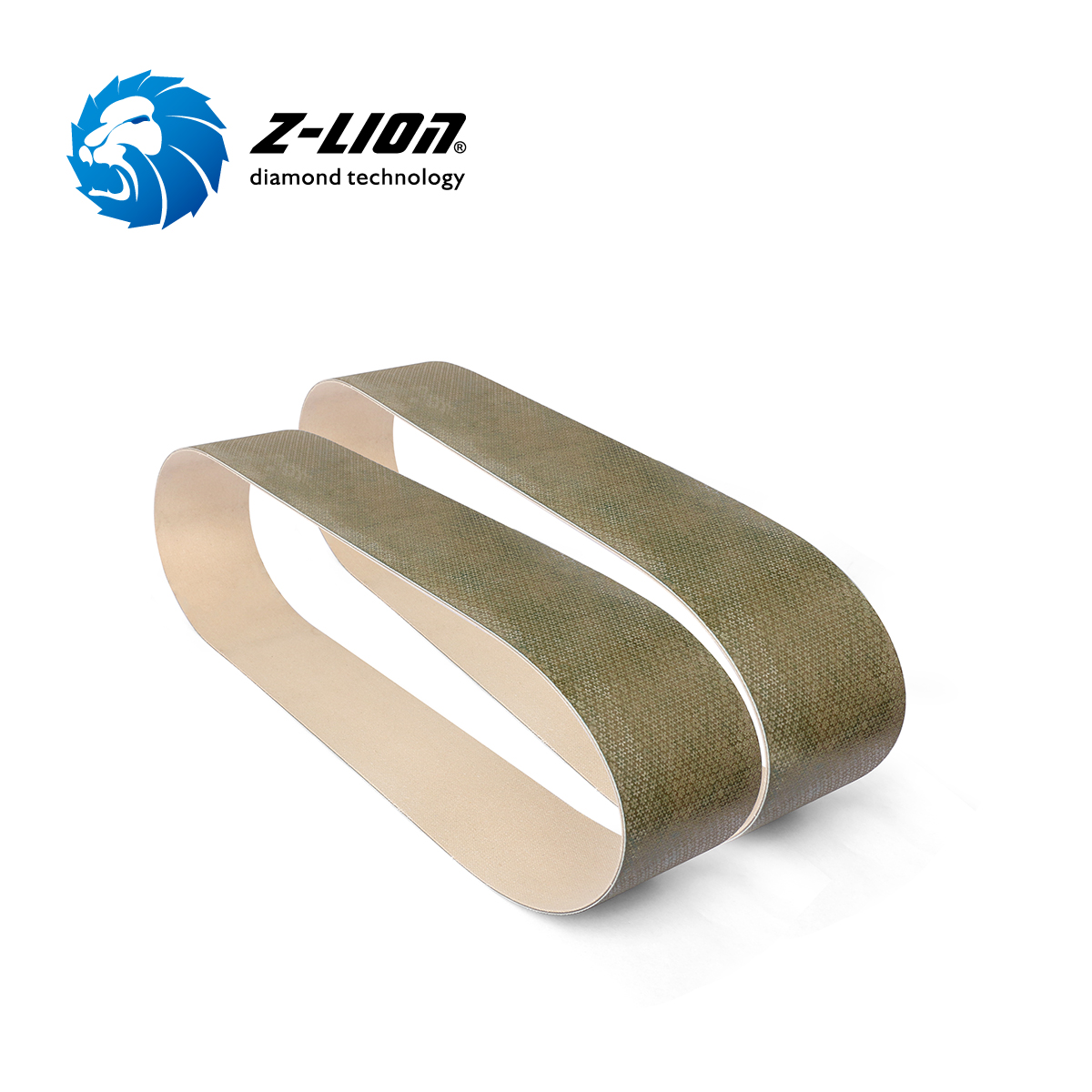
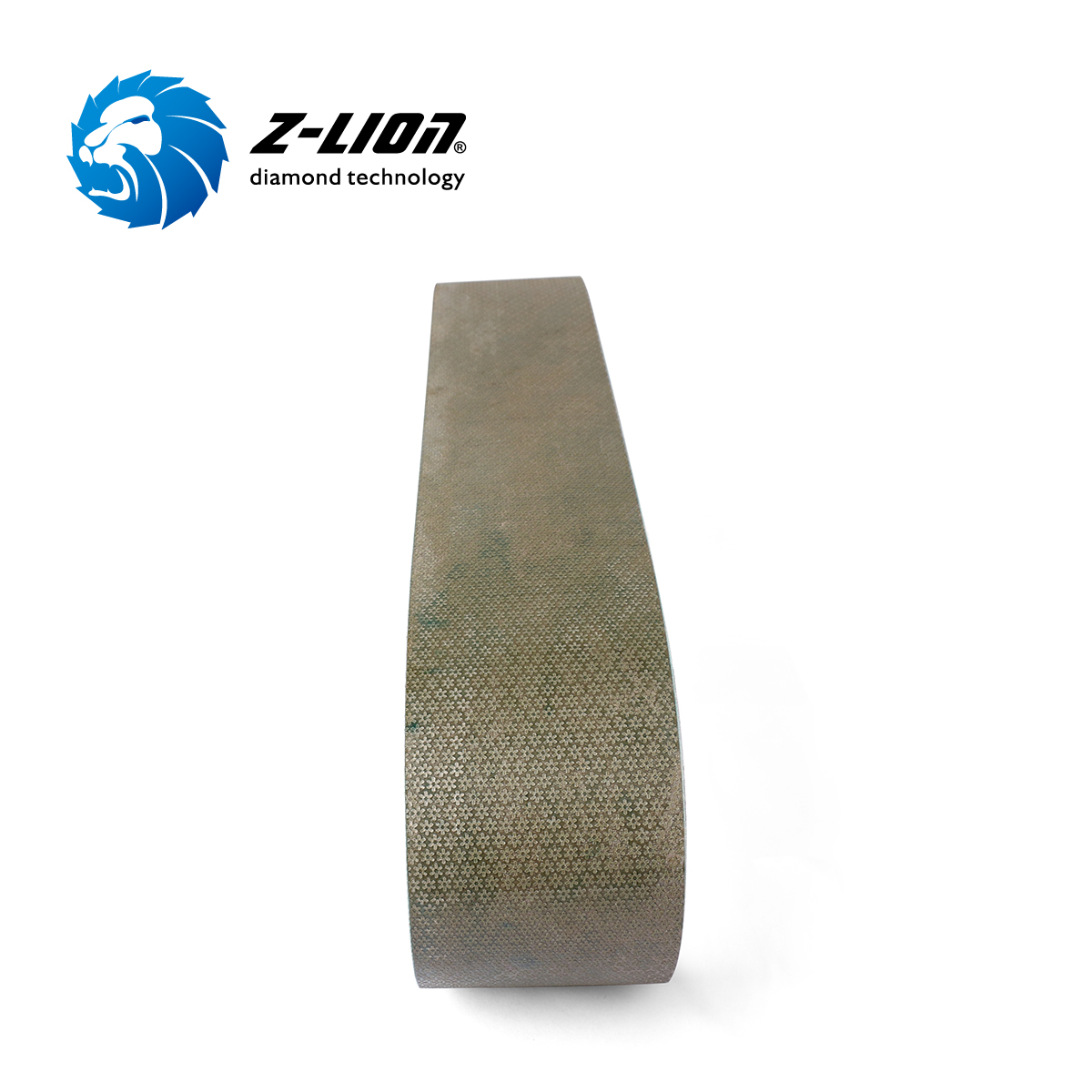
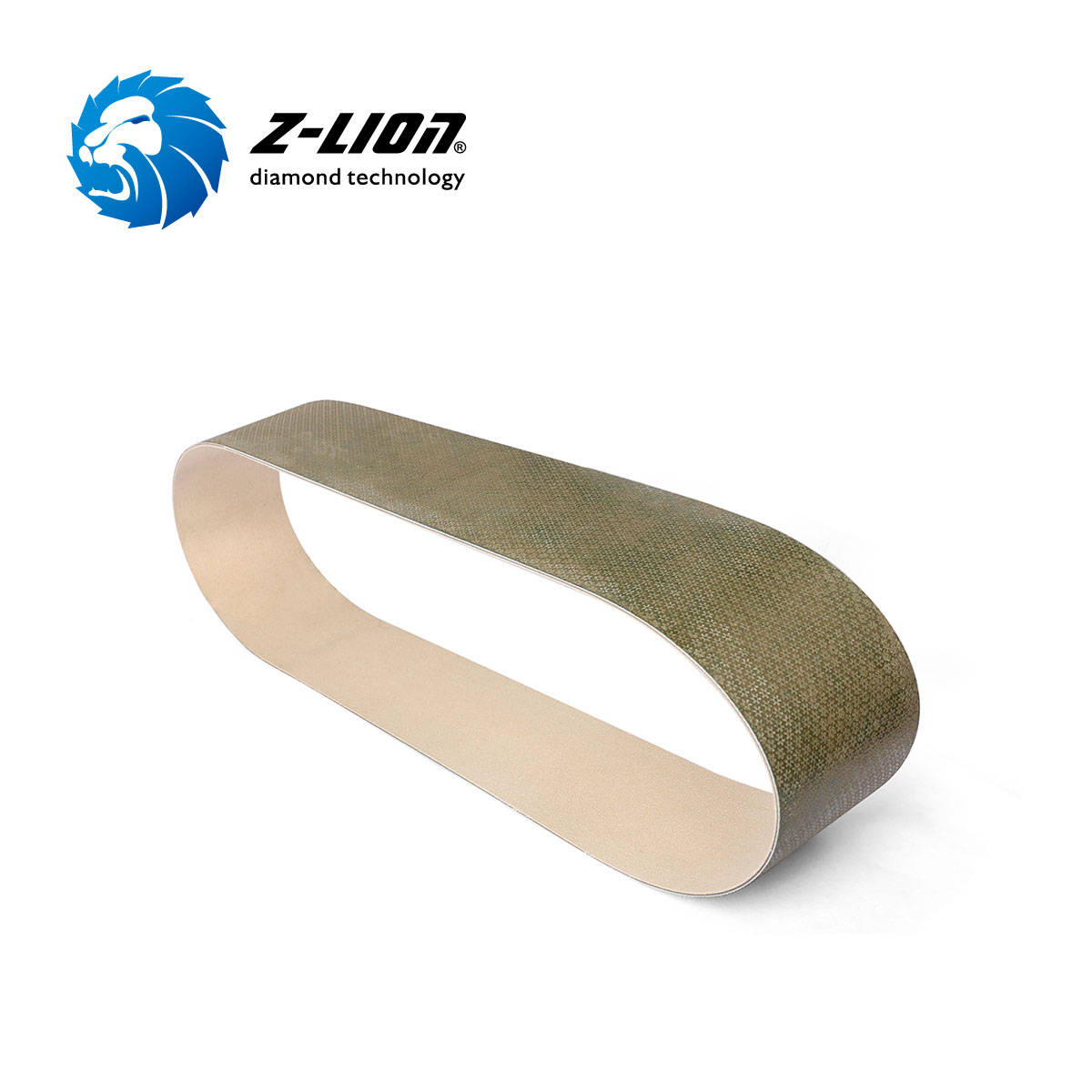
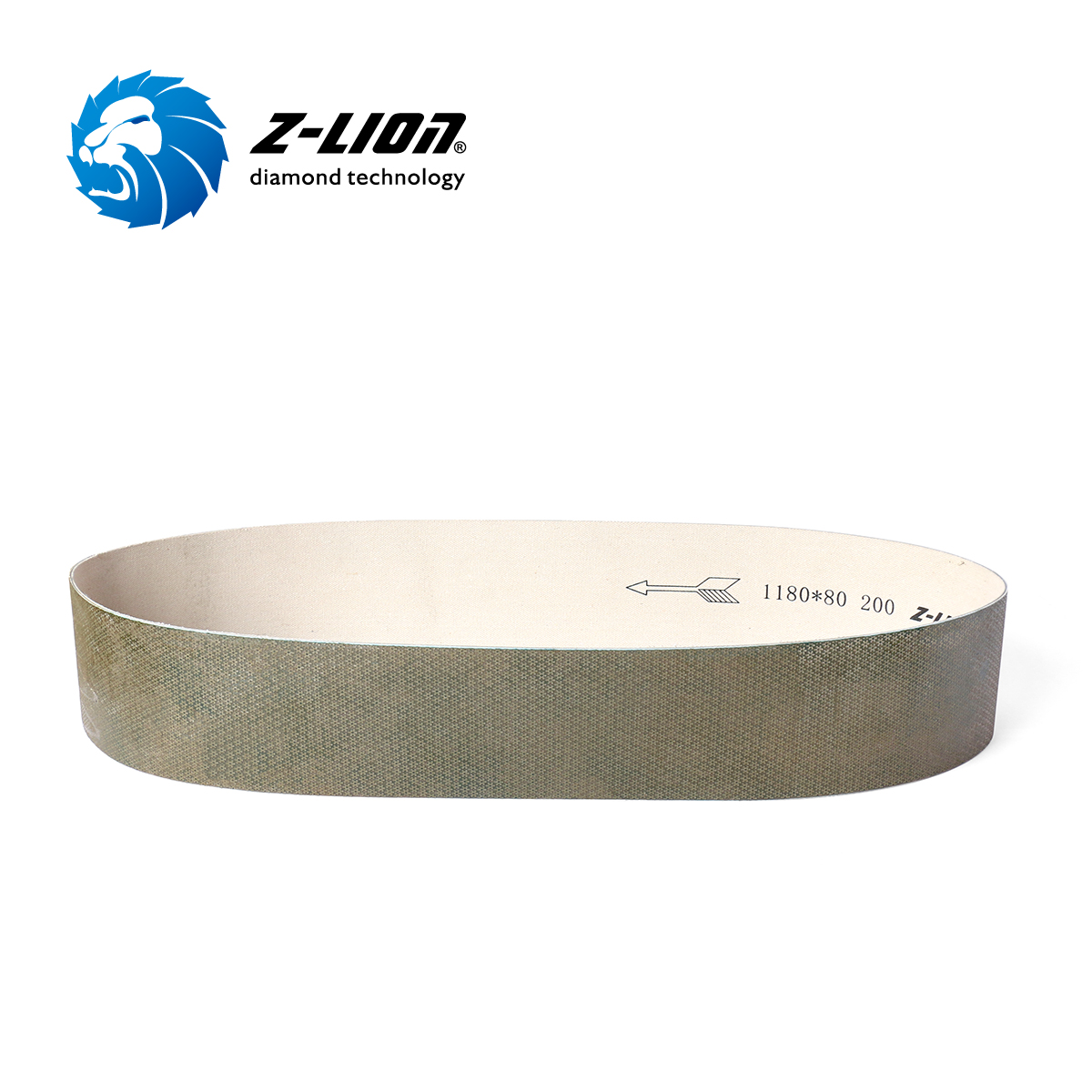


ZL-EB Electroplated Diamond Sanding Belts for Glass Stone Ceramic Tile Grinding
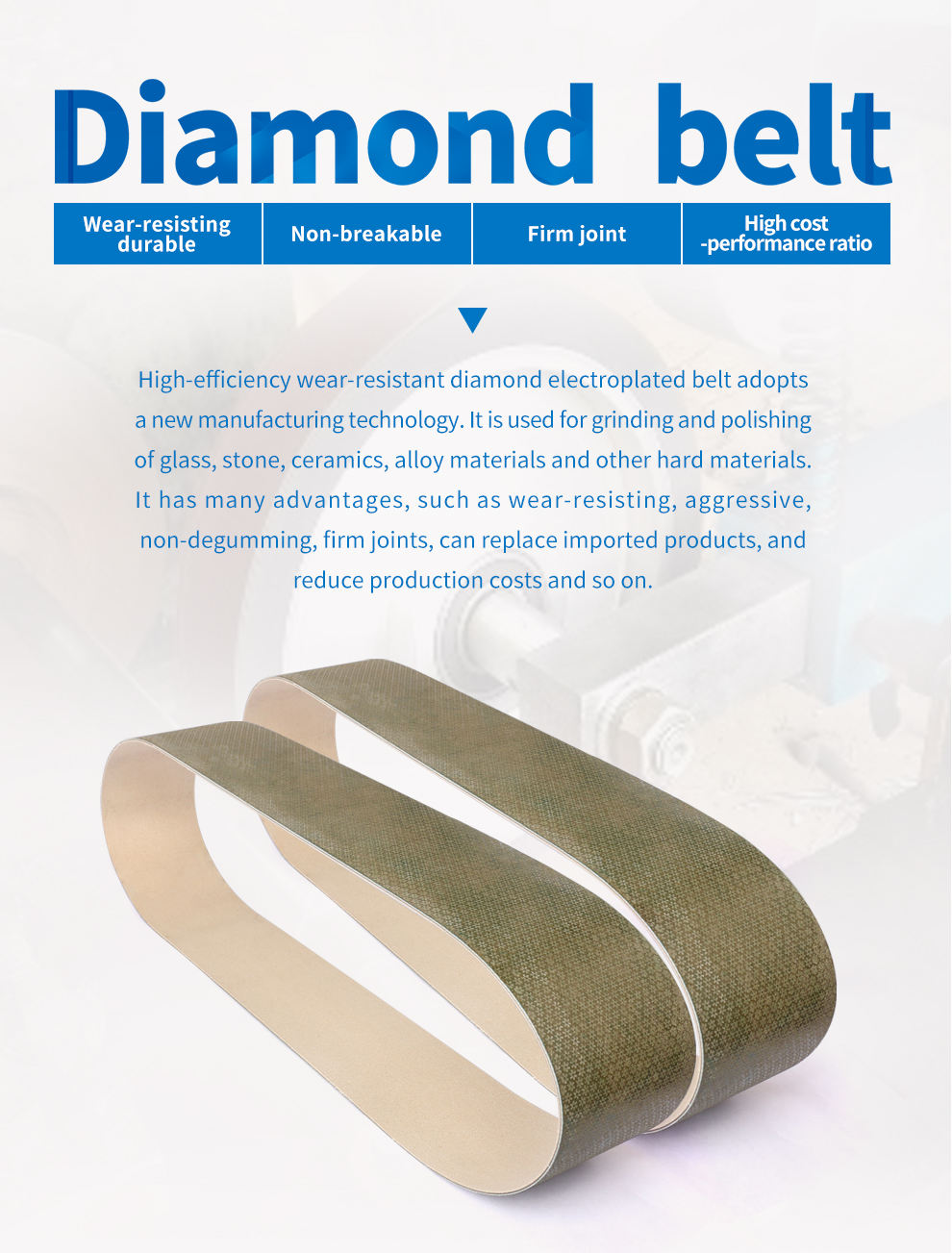
High-efficiency wear-resistant diamond sanding belts made by a new manufacturing technology. It is used for grinding and polishing of glass, stone, ceramics, alloy materials, and other hard materials. It has many advantages, such as wear resistance, aggressiveness, no peeling off, firm joints, reduced production costs, and so on.
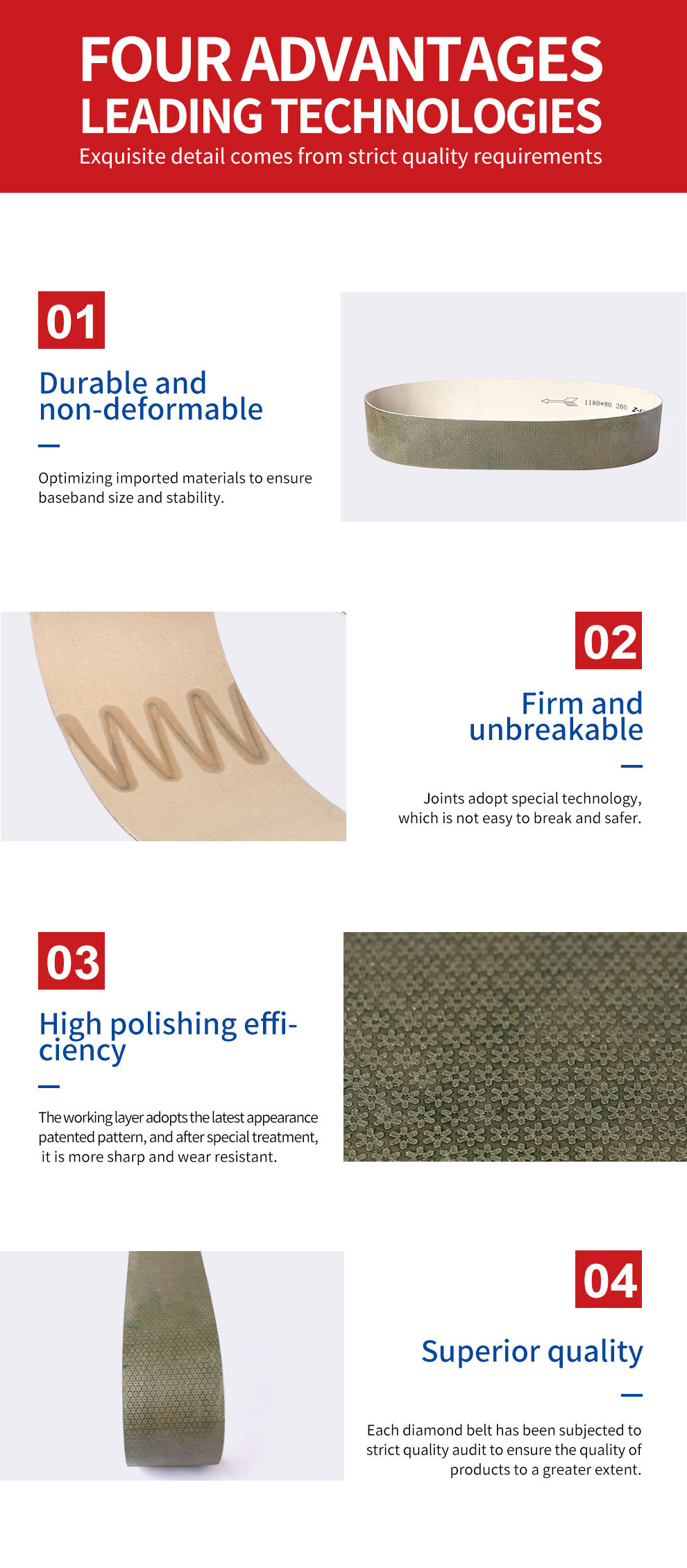
Advantage:
1. Durable and non-deformable
2. Firm and unbreakable
3. High polishing efficiency
4. Superior quality
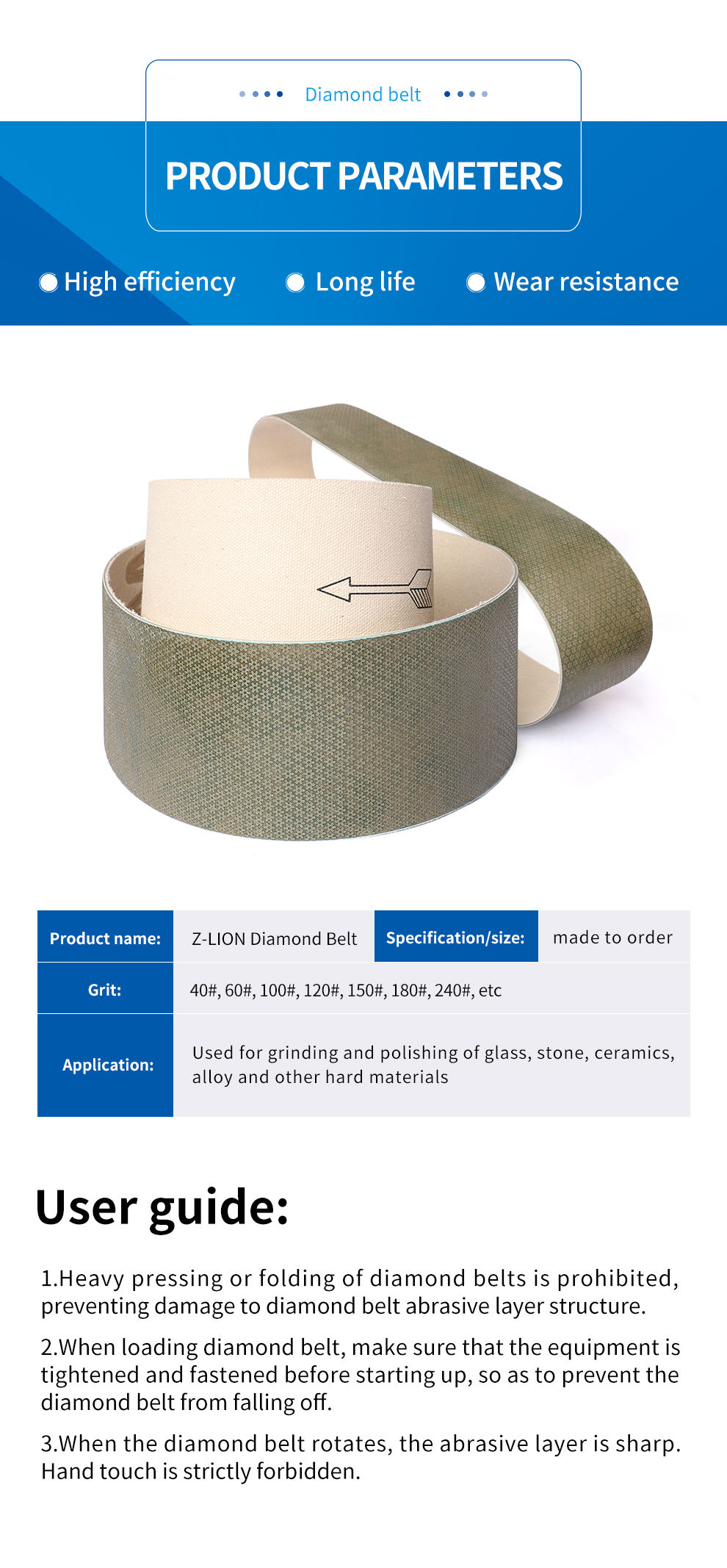
Product code: ZL-EB
Specification: 1180*80mm, 1800*50mm, 2000*80mm, 533*30mm
Grit: 30# 60# 120# 200# 400# 600#
Expert Guide: Diamond Sanding Belts
Introduction
Welcome to our expert guide on diamond sanding belts! In this article, we will provide you with valuable insights and information about these essential tools for grinding and polishing various materials. Diamond sanding belts are coated abrasive tools that consist of superhard material, synthetic diamond particles, adhered to a flexible base by a bond.
These belts offer high efficiency and produce high-quality processing surfaces, making them adaptable for a wide range of applications. Whether you need to grind steel, stone, glass, ceramics, or other hard and brittle materials, diamond sanding belts are your go-to solution.
In this guide, we will explore the classification of diamond sanding belts, including the different bond types available. You will learn about metal nickel plating electroplated bonds and resin bonds, which are further categorized into flexible and hard types. Each bond type has its own characteristics and advantages, allowing you to choose the most suitable option for your specific needs.
We will also discuss the importance of selecting the right backing base for your diamond sanding belt. The backing base's thickness, softness, temperature resistance, and ease of removal play a crucial role in achieving optimal grinding results. By understanding the characteristics of different backing bases, you can ensure efficient and effective material removal.
Throughout this guide, we will provide expert analysis and insights into the performance of electroplated and resin diamond sanding belts. You will discover the grinding force, surface quality, and other factors that differentiate these two bond types. Additionally, we will showcase related products, such as diamond flap wheels, diamond sanding paper, and diamond hand polishing pads, to complement your diamond sanding belt usage.
Stay tuned as we delve into the world of diamond sanding belts and equip you with the knowledge to make informed decisions for your grinding and polishing needs. Let's explore the possibilities and unleash the full potential of diamond sanding belts together!
Classification of Diamond Sanding Belts
When it comes to diamond sanding belts, there are various classifications that you should be aware of. Understanding these classifications will help you choose the right belt for your specific needs. Let's take a closer look at the different classifications:
Bond: Metal Nickel Plating Electroplated Bond and Resin Bond
Diamond sanding belts can be classified based on their bond type. The two main types of bonds are metal nickel plating electroplated bond and resin bond. The metal nickel plating electroplated bond involves bonding diamond particles to the belt using nickel plating. This creates a sharp abrasive layer with strong grinding force. On the other hand, resin bond can be further classified into flexible and hard types. The flexible resin bond is more suitable for wet grinding, while the hard resin bond is better for dry grinding.
Pattern: Various Design Patterns for Different Grinding Advantages
Diamond sanding belts come in various patterns, each offering different grinding advantages. These patterns include sharpness, durability, flexibility, and suitability for dry or wet grinding. It is important to choose the right design pattern based on your specific needs and requirements.
Backing Base: Choosing the Right Backing Base for Specific Materials
The backing base of a diamond sanding belt plays a crucial role in its performance. The main characteristics of the backing base include thickness, softness, temperature resistance, and ease of removal. It is essential to select the backing base that is most suitable for the material you will be grinding.
By understanding the classification of diamond sanding belts, you can make informed decisions when choosing the right belt for your specific application. Whether you need a metal nickel plating electroplated bond or a resin bond, or a specific design pattern or backing base, there is a diamond sanding belt available to meet your needs.
Bond: Metal Nickel Plating Electroplated Bond and Resin Bond
When it comes to diamond sanding belts, the bond plays a crucial role in determining their performance and effectiveness. There are two main types of bonds used in diamond sanding belts: metal nickel plating electroplated bond and resin bond.
The metal nickel plating electroplated bond is created by bonding diamond particles to the belt's surface through nickel plating. This bond forms a sharp abrasive layer that provides exceptional grinding force. It is suitable for both dry and wet grinding, making it versatile for various applications. With superior grinding force, the electroplated bond is especially effective for rough to finish polishing.
On the other hand, resin bond can be divided into flexible and hard types based on their degree of hardness. The flexible resin bond offers good softness and flexibility, allowing it to fit the surface of the workpiece more accurately. This results in better polishing performance. However, due to its softness, the wear is faster, and it has poor temperature resistance. As a result, it is not suitable for coarse grit-sized abrasive belts and can only be used for wet grinding under certain conditions.
In contrast, the hard resin bond offers improved wear resistance and better temperature resistance. It can be used for dry grinding, making it suitable for water-proof and oil-proof products. The thicker resin abrasive layers in hard resin belts allow for various mesh sizes, making them ideal for rough to finish grinding. However, hard resin belts are less flexible and more suitable for larger diameter rollers, particularly in the thermal spray coating industry.
In summary, the choice between metal nickel plating electroplated bond and resin bond depends on the specific requirements of the grinding task. Both bonds have their unique characteristics and performance advantages, making them valuable options for different applications.
Pattern: Various Design Patterns for Different Grinding Advantages
When it comes to diamond sanding belts, the design pattern plays a crucial role in determining the grinding advantages. With a wide range of patterns available, it is important to choose the right one based on your specific needs.
One of the key advantages of diamond sanding belts is their sharpness, which allows for precise and efficient grinding. Different design patterns can enhance this sharpness and offer additional benefits. For example, some patterns are more durable, making them suitable for long-lasting use. Others are more flexible, enabling them to adapt to different workpiece surfaces and contours.
Whether you prefer dry or wet grinding, there are design patterns that cater to both options. Dry grinding patterns are ideal for situations where water or coolant cannot be used, while wet grinding patterns provide better results when used with water or other liquids.
To select the right design pattern, consider the material you will be grinding. Each pattern has its own characteristics that make it suitable for specific materials. For instance, a pattern with finer grits may be better for grinding delicate materials like ceramics or glass, while a pattern with coarser grits may be more effective for grinding harder materials like steel or cemented carbide.
By choosing the appropriate design pattern for your diamond sanding belt, you can maximize its grinding advantages and achieve superior results. Remember to consult with experts or refer to manufacturer recommendations to ensure the best match between the pattern and your grinding needs.
Backing Base: Choosing the Right Backing Base for Specific Materials
When it comes to diamond sanding belts, selecting the right backing base is crucial for achieving optimal results in your grinding applications. The backing base plays a significant role in determining the overall performance and efficiency of the abrasive belt.
One of the key characteristics to consider when choosing a backing base is thickness. The thickness of the backing base will impact the stability and durability of the sanding belt. Thicker backing bases are generally more robust and can withstand heavy-duty grinding tasks, while thinner backing bases are suitable for lighter applications.
Another important factor to consider is the softness of the backing base. The softness of the backing base determines its ability to conform to the shape of the workpiece, ensuring even and consistent grinding. A softer backing base is ideal for achieving smooth and uniform finishes on curved or irregular surfaces.
Temperature resistance is also a crucial consideration. Different materials require different grinding temperatures, and the backing base should be able to withstand the heat generated during the grinding process. Choosing a backing base with excellent temperature resistance will prevent premature wear and ensure the longevity of the sanding belt.
Lastly, ease of removal is an essential factor to consider. The backing base should allow for quick and effortless removal, enabling efficient belt changes and reducing downtime in your grinding operations.
When selecting the backing base for your diamond sanding belt, it is important to consider the specific material that will be ground. Different materials have different grinding requirements, and choosing the appropriate backing base will ensure optimal performance and results.
In conclusion, choosing the right backing base for your diamond sanding belt is crucial for achieving efficient and effective grinding. Consider factors such as thickness, softness, temperature resistance, and ease of removal to select the backing base that best suits your specific grinding needs.
Bonded Type and Characteristics Analysis: Electroplated Bond and Resin Bond
When it comes to diamond sanding belts, there are two main types of bonds that are commonly used: electroplated bond and resin bond. Each bond has its own unique characteristics and advantages, making them suitable for different applications.
Electroplated Bond Diamond Sanding Belts
Electroplated bond diamond sanding belts are created by bonding diamond particles to the belt's surface using a nickel plating process. This results in a sharp abrasive layer with exceptional grinding force. These belts can be used for both dry and wet grinding, making them versatile for various polishing needs.
The electroplated bond offers superior grinding force compared to the resin bond. It provides a high-quality processing surface, ensuring efficient and effective grinding results. Whether you need to rough or finish polish, the electroplated bond diamond sanding belt delivers consistent performance and excellent surface quality.
Resin Bond Diamond Sanding Belts
Resin bond diamond sanding belts are available in both flexible and hard types, offering different degrees of hardness and flexibility. The flexible resin bond is ideal for wet grinding, as it can better conform to the surface of the workpiece and provide superior polishing performance. However, it wears faster due to its softness and has lower temperature resistance, making it unsuitable for coarse grit sized abrasive belts.
On the other hand, the hard resin bond offers improved wear resistance and better temperature resistance. It is suitable for dry grinding and can meet the processing requirements of water-proof and oil-proof products. The thicker resin abrasive layers allow for various mesh sizes, making it suitable for rough to finish grinding. However, the hard resin bond is less flexible and more suitable for grinding on rollers with larger diameters, especially in the thermal spray coating industry.
In summary, the choice between electroplated bond and resin bond diamond sanding belts depends on the specific application and grinding requirements. Both bonds offer unique characteristics and performance, allowing for efficient and reliable grinding operations.
Performance of Electroplated and Resin Diamond Sanding Belts
When it comes to the performance of electroplated and resin diamond sanding belts, there are a few key factors to consider.
Firstly, let's talk about electroplated diamond sanding belts. These belts are known for their superior grinding force, making them ideal for both dry and wet grinding applications. They offer a wide range of grit sizes, allowing for rough to finish polishing. The electroplated bond creates a sharp abrasive layer that ensures efficient and effective grinding. In terms of surface quality, electroplated diamond belts outperform resin diamond belts.
On the other hand, resin diamond sanding belts offer a more flexible bond. This flexibility allows for wet grinding, which can be advantageous in certain applications. Resin diamond belts are also suitable for dry grinding, providing a stable and consistent grinding speed. The hard resin bond is particularly resistant to wear and offers better temperature resistance compared to the flexible resin bond. However, it's important to note that the flexible resin bond is better suited for achieving a superior polishing effect.
In terms of grinding force, electroplated diamond belts have the edge over resin diamond belts. However, when it comes to surface quality, resin diamond belts can deliver excellent results. The choice between the two types of diamond belts ultimately depends on the specific requirements of the application.
It's worth mentioning that both electroplated and resin diamond sanding belts have their advantages and limitations. While electroplated diamond belts excel in grinding force, resin diamond belts offer more flexibility and better temperature resistance. Therefore, it's important to carefully consider the needs of your project and select the appropriate diamond sanding belt accordingly.
Related Products
When it comes to diamond sanding belts, there are a variety of related products that can enhance your sanding and polishing experience. These products are designed to complement the performance and efficiency of diamond sanding belts, ensuring high-quality results and increased productivity.
Diamond Flap Wheel: This versatile tool is perfect for smoothing and shaping irregular surfaces. With its diamond-coated abrasive surface, it provides exceptional cutting power and durability.
Diamond Sanding Paper: Ideal for precision sanding and polishing, diamond sanding paper offers a smooth and flawless finish on various materials, including glass, ceramics, and metals.
Diamond Handing Polishing Pad: Designed for manual polishing, this pad is perfect for intricate and delicate work. Its diamond particles ensure efficient polishing and long-lasting performance.
Silicon Carbide Belts: These sanding belts are made from silicon carbide, a highly abrasive material. They are perfect for heavy-duty sanding and grinding applications on materials such as stone, glass, and metal.
Expandable Rubber Drums: These drums are used in conjunction with diamond sanding belts for precise and controlled sanding and polishing. They provide a secure grip on the belt, ensuring smooth and even results.
Resin Bonded Cabbing Machine Belts: These belts are specifically designed for lapidary work, including shaping and polishing gemstones. They offer excellent durability and performance, making them a popular choice among lapidary enthusiasts.
Felt Polishing Belt: This high-quality belt is used for the final polishing stage, providing a glossy and mirror-like finish on various materials, including glass and metals.
By incorporating these related products into your diamond sanding belt setup, you can achieve superior results and optimize your sanding and polishing processes. Each product is designed to meet specific needs and enhance the performance of diamond sanding belts, ensuring a professional finish every time.

Contact us, you will get more than what you see.
-All diamond tools can be ordered and fabricated!
-Henry Wang | Quote Manager
-WhatsApp:+86-18030177538
-Email: VIP@zliontools.com
-Web www.zliontools.com

-
Online service
-
Official wechat account

-
QQ:844389055
-
E-mail:VIP@zliontools.com
Online Message
Please feel free to give your inquiry in the form below. We will reply you in 24 hours.