Diamond Flexible Polishing Pads Vs Other Abrasive Tools: What Are the Advantages?
In modern industrial production, architectural decoration and various handicraft fields, grinding is an indispensable process. From polishing metal surfaces, fine processing of stone to grinding of wood, different materials and process requirements have spawned a variety of grinding tools. Among them, flexible polishing pads stand out due to their unique performance characteristics and advantages over traditional grinding tools. This article will explore the differences and advantages of flexible polishing pads compared with other common grinding tools.
Limitations of Traditional Grinding Tools
1. Sandpaper
Sandpaper is one of the most commonly used abrasive tools and consists of abrasive particles attached to a paper backing. Although sandpaper has a wide range of uses, it also has some limitations:
Short lifespan: Sandpaper wears out quickly, especially when working with harder materials or complex surfaces. Frequent sandpaper replacement not only reduces sanding efficiency, but also increases costs.
Dust generation: The grinding process using sandpaper generates a lot of dust, which can negatively affect the working environment and pose a risk to the operator's health.
2. Wire brush
Wire brushes are primarily used to remove rust, paint, and other surface contaminants. However, they also have significant disadvantages:
Limited fine abrasive capabilities: While wire brushes are good for heavy duty cleaning, they are not designed for fine abrasiveness. They may leave scratches and damage softer materials.
Deformation: The wires in the brush can easily deform during use, reducing its effectiveness and causing inconsistent results.
3. Grindstone
Grinding stones use abrasive particles to grind the surface of a workpiece. They have some advantages, but also limitations:
Less efficient for large areas: When treating large surfaces, grinding stones are less efficient as they require more time to achieve the desired effect.
Risk of surface damage: For softer materials, over-grinding can lead to surface damage. In addition, the grinding stone usually needs to be kept wet with water, which increases the complexity of the operation.
Special Advantages of Diamond Flexible Polishing Pads
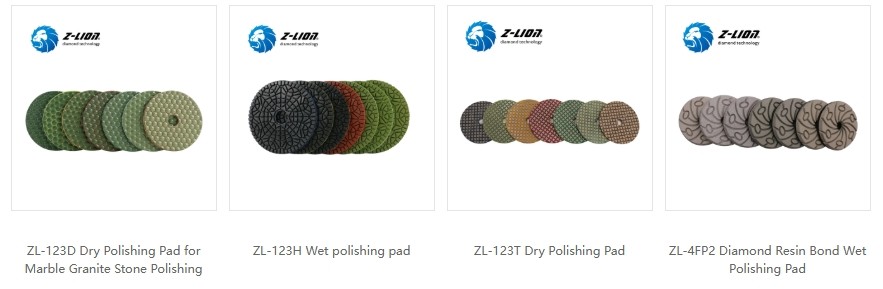
1. High efficiency grinding performance
One of the most significant advantages of diamond flexible polishing pads is their efficient grinding performance. Diamond is one of the hardest substances known, far exceeding the hardness of traditional abrasive materials. This inherent property enables diamond flexible polishing pads to excel at grinding a variety of materials, including:
Hard metals: When working with tough metals like stainless steel, diamond flexible polishing pads can quickly remove excess material, achieving a smooth polished surface in a fraction of the time compared to traditional methods.
Stone: For stone surfaces, these pads provide effective grinding and polishing, ensuring a high gloss finish is achieved while preserving the natural beauty of the stone.
Soft Materials: Even when dealing with softer materials such as wood, diamond flexible polishing pads can effectively remove material without causing damage, making them suitable for different applications.
Efficiency example
Take the polishing process of stainless steel products as an example. Traditional sandpaper usually requires multiple changes of grit to achieve the desired polishing effect, which increases labor and time. In contrast, diamond flexible polishing pads can seamlessly transition from coarse grinding to fine grinding, completing the entire polishing process more quickly and efficiently. This capability not only improves production efficiency, but also reduces the overall cost of grinding operations.
2. Good flexibility
Another major advantage of diamond flexible polishing pads is their exceptional flexibility. Unlike conventional grinding tools, these polishing pads are designed to conform to the contours of the workpiece to achieve optimal machining results. This flexibility brings many benefits:
Adapts to Complex Shapes: Diamond flexible polishing pads can easily conform to workpiece surfaces with complex designs or curves. This is particularly beneficial in applications such as automotive body repair, where surfaces often have various curves and irregular shapes.
Uniform grinding: These polishing pads have the ability to flex and conform, ensuring that every corner and edge of the workpiece is polished evenly. This uniformity is essential to achieve a high-quality finish, especially in visible areas where aesthetics are important.
Flexibility example
In car body restoration, achieving a smooth, flat surface is critical for both appearance and functionality. Conventional sandpaper has difficulty conforming to the complex shape of the car body, resulting in uneven sanding and ultimately poor results. Diamond flexible polishing pads, on the other hand, easily conform to the contours of the car body surface, ensuring that all areas are polished evenly. The result is a superior polishing effect that improves the overall quality of the restoration job.
3. Long life and high wear resistance
One of the most compelling benefits of diamond flexible polishing pads is their exceptionally long service life. The durability of these polishing pads is primarily due to the inherent hardness and wear resistance of diamond, one of the hardest materials known to man.
Main benefits:
Slow wear: During long grinding operations, the diamond abrasive particles in the flexible polishing pad wear significantly slower than traditional abrasives such as sandpaper or wire brushes. This means that under similar workloads, diamond flexible polishing pads need to be replaced much less frequently.
Cost-effective: For example, in a stone processing plant, a diamond flexible polishing pad used to grind a marble slab can be used continuously for weeks or even months without replacement. In contrast, sandpaper may need to be replaced every few days. This long service life not only reduces the time and labor costs required to replace tools, but also significantly saves material costs over time.
Increased productivity: Diamond flexible polishing pads last longer, allowing operators to focus on the job without having to frequently replace worn tools. From industrial manufacturing to fine craftsmanship, productivity and efficiency are improved in a variety of applications.
4. Environmental protection and safety
In addition to durability, diamond flexible polishing pads also offer significant environmental and safety benefits – properties that are increasingly important in today’s industrial environment where sustainability and worker safety are key.
Main benefits:
Reduce dust generation: Traditional grinding tools, such as sandpaper, generate a lot of dust during the grinding process. This dust not only pollutes the working environment, but also causes serious harm to the health of operators, especially affecting the respiratory system. Diamond flexible polishing pads generate significantly less dust, and the dust particles generated are larger and less likely to enter the air. This feature helps maintain a cleaner working environment and reduces health risks for workers.
Operator safety: Unlike wire brushes that can create sharp metal fragments and pose a risk of injury, diamond flexible polishing pads do not create such hazards. The absence of sharp wire fragments minimizes the risk of cuts and scrapes to operators, thereby improving workplace safety.
Sustainable practices: Diamond flexible polishing pads last longer and produce less waste, helping to promote sustainable practices in the manufacturing and construction industries. By reducing tool change frequency and minimizing dust contamination, these polishing pads meet the growing environmental awareness.
Comparison of Application Scenarios of Diamond Flexible Polishing Pads
1. Metal processing
In the metalworking industry, the quality of the finished product is of vital importance. Diamond flexible polishing pads are increasingly used for deburring and polishing metal surfaces, offering many advantages over conventional metal grinding tools.
Advantage:
Fine grinding effect: Diamond flexible polishing pads provide excellent polishing results, giving metal surfaces a mirror-like finish. This is particularly important in industries such as aerospace, where even the smallest imperfections can affect the performance of critical components.
Surface Integrity: Unlike traditional hard abrasive tools that can leave scratches or pits, diamond flexible polishing pads maintain the integrity of the metal surface. This ensures that polished parts not only look great, but also perform at their best.
Flexible Adaptation to Complex Shapes: The flexibility of diamond polishing pads enables them to conform to the complex geometries of metal parts. This adaptability ensures that every detail is polished with precision, making it ideal for complex parts.
2. Stone processing plant
Stone processing is a traditional application area for diamond flexible polishing pads. They are particularly effective for materials such as marble and granite where surface quality is critical.
Advantage:
High grinding efficiency: Diamond flexible polishing pads can quickly remove blemishes and scratches from the stone surface, restoring the smoothness of the stone surface in a fraction of the time required by traditional grinding stones. This efficiency is critical for large-scale stone processing operations.
Stable grinding performance: The high wear resistance of the diamond flexible polishing pad enables it to maintain consistent grinding performance for a long time. This reduces the frequency of tool replacement, thereby saving costs and improving production efficiency.
Controlled grinding depth: Diamond flexible polishing pads allow for better control of grinding depth when grinding stone. This minimizes the risk of over-grinding, which can damage the stone surface and affect its aesthetics.
3. Wood processing
Diamond flexible polishing pads also demonstrate their versatility and effectiveness in wood processing. They can be used in a variety of processes, including sanding and chamfering wood surfaces.
Advantage:
Adapts to Irregular Grain: Diamond flexible polishing pads can easily conform to the irregular grain of the wood surface, providing a more even polish than traditional sandpaper. This adaptability is especially effective when polishing hardwood.
Effectively remove burrs: Traditional sandpaper is difficult to effectively remove burrs and blemishes on hardwood surfaces due to its low hardness. In contrast, the diamond flexible polishing pad can effectively polish the wood surface with its high hardness diamond particles to create a delicate surface.
Easy to sand corners: The flexibility of the diamond polishing pad makes it easier to sand the corners of wooden pieces. This helps to avoid excessive wear on the wood surface and maintain its original shape and structure.
Conclusion
In general, diamond flexible polishing pads have shown many obvious advantages in comparison with traditional grinding tools. Its effective grinding performance, good flexibility, long life and high wear resistance, as well as environmental protection and safety, make it have broad application prospects in many fields such as metal processing, stone processing, and wood processing. With the continuous improvement of industrial production requirements for processing accuracy and efficiency, and people's increasing attention to environmental protection and work safety, diamond flexible polishing pads, as an advanced grinding tool, will surely occupy a more important position in the future grinding market.
-
Online service
-
Official wechat account

-
QQ:844389055
-
E-mail:VIP@zliontools.com
Online Message
Please feel free to give your inquiry in the form below. We will reply you in 24 hours.