Get to Know More About the Manufacturing Process of Diamond Saw Blades
Diamond saw blades have become an essential tool for modern industrial cutting, particularly for processing hard and brittle materials like stone, ceramics, and concrete. Their superior cutting performance and versatility make them a top choice for a wide range of applications. This article will delve into the manufacturing process of diamond saw blades, revealing the technical secrets behind their efficiency and durability.
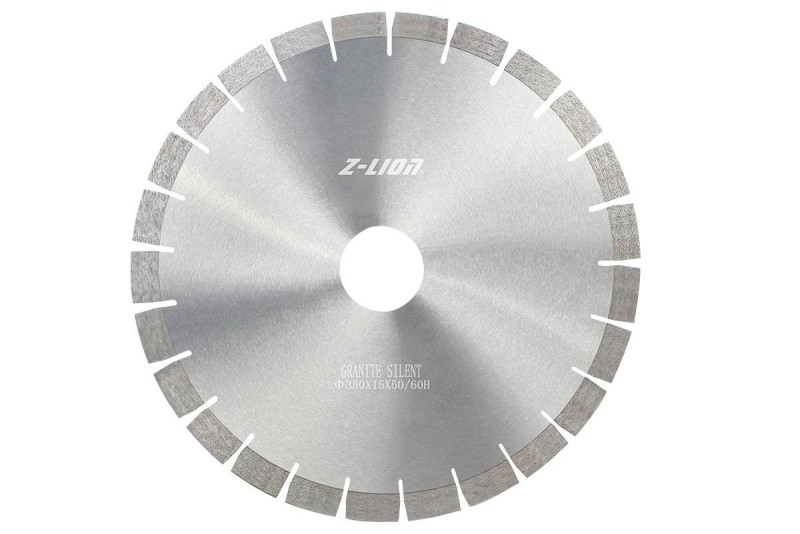
Basic Components of Diamond Saw Blades
Base: The base is usually made of high-strength steel and is the main support structure of the blade. It provides stability and rigidity, ensuring that the blade maintains its shape during cutting.
Diamond grains: Diamond grains are the cutting edge of the blade and are known for their unparalleled hardness. These grains determine the blade’s ability to efficiently cut through hard materials.
Metal matrix: The metal matrix encapsulates and bonds the diamond particles, forming a strong cutting layer. The metal matrix is crucial for securing the diamonds and ensuring the necessary strength and durability of the blade.
Diamond Saw Blade Manufacturing Process
1. Sintering process
The sintering process is a key step in the manufacturing process of diamond saw blades, which is mainly divided into cold pressing and hot pressing.
Cold pressed
In the cold pressing method, diamond particles are mixed with metal powder to form a composite material. The mixture is then placed in a mold and high pressure is applied to form a dense shape. The dense material is then sintered at high temperatures to bond the metal to the diamond particles. This process creates a strong cutting layer that effectively secures the diamond, enabling efficient cutting.
Cold pressing is favored for its ability to produce blades with a balance of hardness and toughness. However, the bond strength achieved with this method may not be as high as with hot pressing.
Hot pressing
Hot pressing is similar to hot stamping, but uses higher temperatures and pressures. In hot pressing, the diamond particles and metal powder are pressed together while being heated. The high temperature creates a stronger bond between the diamond particles and the metal matrix, resulting in a more even distribution of the diamonds across the blade.
The hot pressing process is particularly suitable for producing blades that require high bond strength and durability, especially for cutting extremely hard materials. The uniform distribution of diamonds achieved by this method also helps to improve cutting performance.
2. Welding process
Welding is another important manufacturing technology for fixing the diamond bit to the tool base. The main welding methods include high-frequency welding, laser welding and brazing.
High-frequency welding
High-frequency welding uses a high-temperature molten medium to weld the diamond tip to the blade base. This process creates a strong bond capable of withstanding the stresses generated during cutting. High-frequency welding is renowned for its efficiency and ability to produce durable blades suitable for a wide range of applications.
Laser welding
Laser welding uses a high-temperature laser beam to melt the contact edges of the diamond tip and the insert. This method creates a strong and precise metallurgical bond. Laser welding is particularly suitable for producing inserts with complex designs or special geometries because it allows for better control of the welding process. The resulting inserts offer excellent cutting performance and a long service life.
Brazing
The brazing process involves applying a brazing alloy to the tool tip base and then placing the diamond tip onto the brazing layer. The assembly is then induction brazed at high temperatures under a shielding gas atmosphere. This method creates a strong bond between the diamond tip and the steel base, ensuring the tip remains secure during the cutting process. Brazing is typically used in applications requiring high precision and durability.
3. Electroplating process
Electroplated diamond saw blades are manufactured using an electroplating process, which electrochemically deposits a layer of metal onto the saw blade base. In this process, diamond particles are embedded within the metal matrix, forming a strong cutting layer. The electroplating process allows for precise control of the thickness of the diamond layer and the distribution of the diamond particles.
Electroplated blades are known for their fine cutting performance and are often used in applications that require high precision, such as cutting glass or ceramics. The electroplating process can also produce blades of different grit sizes to meet different cutting needs.
Diamond Saw Blade Manufacturing Process
1. Raw material preparation
The first step in manufacturing diamond saw blades is raw material preparation. This includes sourcing and preparing diamond particles, metal powder, and any auxiliary materials required in the production process.
Diamond grain: The grade, size, and concentration of diamond grains are key factors affecting the cutting performance of a saw blade. Select high-quality diamonds with the appropriate grit size based on the intended use of the saw blade.
Metal powder: Metal powder is used to form the metal matrix that encapsulates and bonds the diamond particles. Commonly used metals include cobalt, bronze, and other alloys to provide the necessary strength and durability.
2. Molding and pressing
Once the raw materials are prepared, the next step is shaping and pressing. Diamond particles and metal powder are evenly mixed to form a homogeneous mixture. The mixture is then placed into a mold to form the desired saw blade shape and size.
Pressing method: Pressing can be done using either cold or hot pressing techniques. Cold pressing involves compacting the mixture at room temperature, while hot pressing involves applying both heat and pressure. The choice of pressing method affects the bond strength and distribution of diamond particles within the blade.
Controlled parameters: During the pressing process, parameters such as pressure, temperature, and time must be strictly controlled to ensure high-quality forming and uniform distribution of diamond particles. Correct control of these parameters is crucial to achieving the desired blade characteristics.
3. Sintering or welding
After the saw blade is formed, it goes through a sintering or welding process to bond the diamond particles to the metal matrix.
Sintering: During sintering, the finished saw blade is placed in a sintering furnace and heated to a high temperature. This process creates a strong bond between the metal matrix and the diamond particles, forming a strong cutting layer. Sintering can be performed using cold or hot pressing, depending on the desired saw blade properties.
Welding: Alternatively, the diamond tip can be secured to the holder using welding methods such as high-frequency welding, laser welding, or brazing. High-frequency welding uses a molten medium to form a strong bond, while laser welding uses a high-temperature laser beam for precision bonding. Brazing involves applying a brazing alloy to the holder and then using induction heating to securely bond the diamonds together.
4. Grinding and processing
After sintering or welding, the saw blade needs to be ground and machined to achieve the final size and surface finish.
Surface Treatment: The blades are surface treated using a grinder and sandblasting technique to remove any burrs or uneven parts. This step is crucial to improving the blade’s finish and cutting performance.
Dimensioning: Accurately measure and adjust the size and shape of the blade to ensure it meets the design specifications. This step is critical to ensure the blade performs optimally during the cutting process.
5. Quality inspection
The final step in the manufacturing process is quality inspection. Finished saw blades undergo a rigorous inspection process to ensure they meet design requirements and quality standards.
Inspection method: Quality inspection includes visual inspection, dimensional measurement, and cutting performance testing. Each blade is evaluated to ensure it meets the necessary safety and performance specifications.
Release for sale: Only saw blades that pass quality inspection are released for sale and use. This rigorous quality control process helps maintain the manufacturer’s reputation and ensures customer satisfaction.
Application Areas of Diamond Saw Blades
1. Stone industry
The stone industry is perhaps the most prominent application area for diamond saw blades. These saw blades are designed for cutting hard and brittle materials such as:
Marble: Diamond saw blades provide clean cuts and polished edges, which are essential for high-quality marble products.
Granite: The hardness of granite requires the use of specialized diamond blades that can withstand the rigors of cutting without losing their sharpness.
Ceramic wall and floor tiles: Diamond blades ensure precise cutting, allowing for intricate designs and patterns in tile installations.
Concrete products: In the production of concrete blocks and slabs, diamond saw blades facilitate efficient cutting and increase productivity.
Diamond saw blades have become an indispensable tool in stone processing due to their easy operation, high cutting efficiency and excellent processing quality.
2. Ceramics industry
In the ceramics industry, diamond saw blades play a vital role in cutting a variety of ceramic materials, including:
Ceramic tiles: The diamond blade ensures high cutting precision, thus achieving the exact size and shape of the ceramic tiles.
Ceramic Plate: The ability to cut thick ceramic plates with minimal chipping makes diamond saw blades ideal for this application.
Diamond saw blades have high cutting accuracy and can ensure that the size and shape of ceramic products meet the design requirements. Therefore, diamond saw blades are indispensable for manufacturers in this field.
3. Construction
The construction industry is another key application area for diamond saw blades. These blades can be used to cut a variety of construction materials, including:
Concrete: Diamond blades effectively cut concrete, making them an essential tool for construction projects involving foundations, walls, and pavements.
Refractory materials: The durability and heat resistance of diamond blades make them suitable for cutting refractory materials used in high temperature applications.
Diamond saw blades offer efficient cutting performance and excellent durability, making them highly sought after in the construction industry where precision and reliability are crucial.
4. Non-ferrous metal processing
Diamond saw blades can also effectively process non-ferrous metals such as:
copper
Zinc
aluminum
Alloy
Diamond saw blades remain sharp during the cutting process, improving cut efficiency and quality. This property makes them ideal for metalworking and fabrication applications.
5. Composite materials processing
With the advancement of technology, diamond saw blades are increasingly used in composite material processing. They can effectively cut:
Glass Fiber Reinforced Plastic
Silicon Filling Material
Rigid carbon fiber/epoxy composite
Diamond saw blades can meet the cutting needs of various complex materials and are of great value in industries such as aerospace, automotive and construction.
6. Other Applications
In addition to the applications listed above, diamond saw blades are also used for:
Woodworking: Diamond saw blades can cut high-density, high-hardness materials such as particleboard and medium-density fiberboard, providing clean cuts and reducing blade wear.
Glass Processing: In glass processing, diamond saw blades can cut glass of various thicknesses with precision and minimal breakage.
These additional applications further demonstrate the versatility and effectiveness of diamond saw blades across diverse industries.
In Conclusion
Diamond saw blades are highly effective cutting tools used across a wide range of industries. From the stone and ceramic industries to construction, nonferrous metal processing, and composite materials processing, their superior cutting performance and durability make them indispensable tools in a wide range of manufacturing and construction processes. With continued technological advancements, the application range of diamond saw blades is expected to continue to expand, further solidifying their position as an essential cutting tool in modern industry.
-
Online service
-
Official wechat account

-
QQ:844389055
-
E-mail:VIP@zliontools.com
Online Message
Please feel free to give your inquiry in the form below. We will reply you in 24 hours.