Is It Possible to Polish Using an Angle Grinder?
Angle grinders are widely recognized for their versatility in cutting, grinding, and polishing a wide variety of materials. While they are primarily used to cut metal, stone, and ceramic, they can also be effectively used for polishing tasks. This article will explore the principles of polishing with an angle grinder, the types of materials that can be polished, and the tips and considerations needed to achieve the best results.
Polishing Principle of Angle Grinder
The basic principle of polishing with an angle grinder lies in its design and operation. An angle grinder is an industrial machine that uses a transmission mechanism to drive a high-speed rotating grinding head. By installing different types of polishing pads or grinding heads, users can adjust the angle grinder to suit various polishing tasks.
High-speed rotation: The grinding head rotates at high speed to efficiently remove materials. When the grinding head moves on the surface of the material, friction is generated, thereby eliminating defects, removing burrs, and improving the overall surface effect.
Contact and friction: The polishing pad is in constant contact with the surface of the material, creating a frictional action that polishes the surface. This action is essential to achieving a smooth, shiny surface because it gradually removes layers of material to reveal the polished surface underneath.
Versatility: By changing the polishing pad or abrasive, the angle grinder can be adapted to polish a variety of materials, including metal, stone, ceramic, and even plastic. This versatility makes it an ideal tool for both professional and DIY applications.
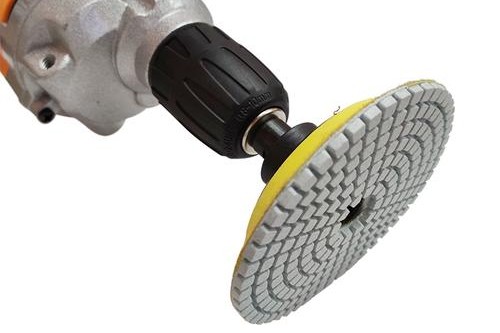
Applicable Scope of Angle Grinder Polishing
Materials suitable for polishing with an angle grinder
Angle grinders can be used to polish a variety of hard materials, including:
Metal: Angle grinders are commonly used to polish metals such as stainless steel, aluminum, brass, and copper. The polishing process can enhance the shine, remove scratches, and make the metal surface more visually appealing.
Stone: Stones such as granite, marble and concrete can also be polished using an angle grinder. Polishing a stone not only improves its beauty, but also seals the surface, making it more resistant to stains and wear.
Glass: Glass surfaces can be polished to remove scratches and improve clarity. However, care must be taken to use the appropriate polishing pad and polishing technique to avoid shattering the glass.
Ceramic: Polishing can give ceramic tiles and pottery a smooth surface. Polishing is particularly useful for removing imperfections and improving the overall appearance of ceramic products.
Handleable shapes and surfaces
One of the significant advantages of using an angle grinder for polishing is its ability to process a wide variety of shapes and surfaces, including:
Plane: Angle grinders excel at polishing flat surfaces and are ideal for countertops, tabletops and floors. The high speed of the polishing pad effectively removes material and creates a smooth surface.
Curved surface: The flexibility of the angle grinder attachment enables the user to polish curved surfaces, such as sculptures or rounded edges. This feature is essential for achieving an even finish on complex shapes.
Sides and angles: Polishing edges and corners can be challenging, but an angle grinder with the right attachments can accomplish these tasks efficiently. This is especially useful for finishing the edges of countertops or tiles.
Arc: Angle grinders can also be used to polish curved lines, allowing for creative designs and finishes in a variety of projects. The ability to maneuver the angle grinder along curves increases the versatility of the tool.
Tips for Polishing with an Angle Grinder
Choose the right polishing pad: Choose a polishing pad that is appropriate for the material you are working on. For example, a wool polishing pad can be used for metal surfaces, and a diamond polishing pad can be used for stone surfaces.
Use the right polish: Depending on the material, you may need to use a polish to enhance the polish. For metal, you can use a metal polish, while for stone, you may need to use a specific stone polish.
Adjust speed and pressure: Start with a lower speed to avoid overheating the material. Gradually increase speed as needed, but always maintain gentle and even pressure to avoid damaging the surface.
Keep your hand steady: Keep the angle grinder steady and move it across the surface in a consistent trajectory. Avoid staying in one position for too long as this can result in uneven polishing or cause damage.
Notes on Polishing with an Angle Grinder
1. Choose the right grinding head and abrasive
The choice of grinding head and abrasive is crucial to achieve the desired polishing effect. Please consider the following factors:
Material hardness: Different materials have different hardnesses. For example, a softer material like aluminum may require a different abrasive than a harder material like granite or stainless steel. For hard materials, use a diamond abrasive disc; for softer surfaces, use a wool or foam abrasive disc.
Material shape: The shape of the item being polished will also influence the choice of abrasive head. For flat surfaces, a flat sanding pad will suffice, whereas for items with well-defined or irregular shapes, a specialized sanding pad that conforms to the surface may be required.
Processing requirements: Determine the desired surface effect (e.g., matte, glossy) and select the abrasive accordingly. Fine grit is used to achieve a high gloss effect, coarse grit is suitable for preliminary grinding and shaping.
2. Implement safety protection measures
Safety is always a top priority when using an angle grinder for polishing. Here are some necessary safety measures:
Personal protective equipment: Always wear goggles to protect your eyes from dust and debris, a dust mask to prevent inhalation of harmful particles, and earmuffs to protect against noise. Also, wear gloves to protect your hands from sharp edges and heat.
Working environment: Ensure that the workplace is well ventilated and away from flammable items. Please keep a safe distance from bystanders to avoid accidents.
3. Maintain horizontal and vertical control
To achieve an even polish, it is important to maintain consistent angle and pressure during the operation:
Control the angle: Keep the angle grinder level and perpendicular to the surface being polished. Deviation from this position may result in uneven polishing and damage to the material.
Maintain steady pressure: Apply constant pressure when polishing. Too much pressure will cause excessive wear of the grinding head and damage the material surface, while too little pressure may result in poor polishing results.
4. Clean the surface before polishing
Before you begin the polishing process, you must prepare the surface:
Remove contaminants: Clean the surface of the material to remove any oil, grease or residue. This step is critical to ensure the polishing process is effective and the final surface is smooth and uniform.
Inspect the surface: Check for any scratches or blemishes so that they can be addressed before polishing. This will help to achieve a better overall result.
5. Adjust speed and pressure appropriately
The speed and pressure settings of the angle grinder should be adjusted depending on the material being processed and the desired result:
Speed settings: Different materials require different speeds for optimal polishing. Generally, lower speeds are suitable for delicate materials, while higher speeds are suitable for harder surfaces. Always refer to the manufacturer's guidelines for recommended speeds.
Pressure management: Monitor the pressure applied during polishing. Adjust as needed to avoid excessive wear on the abrasive tip or damage to the material surface. If you notice the abrasive tip is wearing too quickly, reduce the pressure or change to a finer grit sandpaper.
In Conclusion
Polishing with an angle grinder is not only possible, but an effective way to achieve a high-quality finish on a variety of materials. By understanding the principles of polishing, choosing the right tools, and following the correct techniques and safety precautions, you can use an angle grinder to enhance the appearance of metals, stones, ceramics, and plastics. With practice and attention to detail, you can achieve impressive results with an angle grinder, making it an essential addition to your toolbox.
-
Online service
-
Official wechat account

-
QQ:844389055
-
E-mail:VIP@zliontools.com
Online Message
Please feel free to give your inquiry in the form below. We will reply you in 24 hours.