What is the Electroplated Sanding Belts?
Electroplated Sanding Belts
Introduction
Welcome to our comprehensive guide on electroplated sanding belts! In this article, we will delve into the world of electroplated sanding belts, exploring their characteristics, advantages, applications, selection, and usage, as well as maintenance and care tips.
Electroplated sanding belts are a revolutionary tool in the field of abrasive materials. With their unique design and construction, these belts offer a range of benefits and applications in various industries. Whether you are working with superhard coatings, thermal sprayed materials, or hard and brittle substances, electroplated sanding belts are designed to provide exceptional results.
Throughout this guide, we will explore the key features of electroplated sanding belts, such as their flexibility, ease of use, and high cut rates. We will also discuss their applications in grinding steel, stone, glass, ceramics, and other materials. Additionally, we will provide insights on how to select the right belt for your specific needs and offer tips on proper usage to maximize their effectiveness.
Furthermore, we will share valuable maintenance and care advice to ensure the longevity and optimal performance of your electroplated sanding belts. By following these guidelines, you can prolong the lifespan of your belts and achieve consistent, high-quality results in your sanding and polishing projects.
So, whether you are a professional in the stone industry, ceramics industry, glass industry, or automotive industry, or simply a DIY enthusiast looking to achieve superior finishes, this guide will equip you with the knowledge and expertise to make the most out of electroplated sanding belts. Let's dive in and explore the world of electroplated sanding belts together!
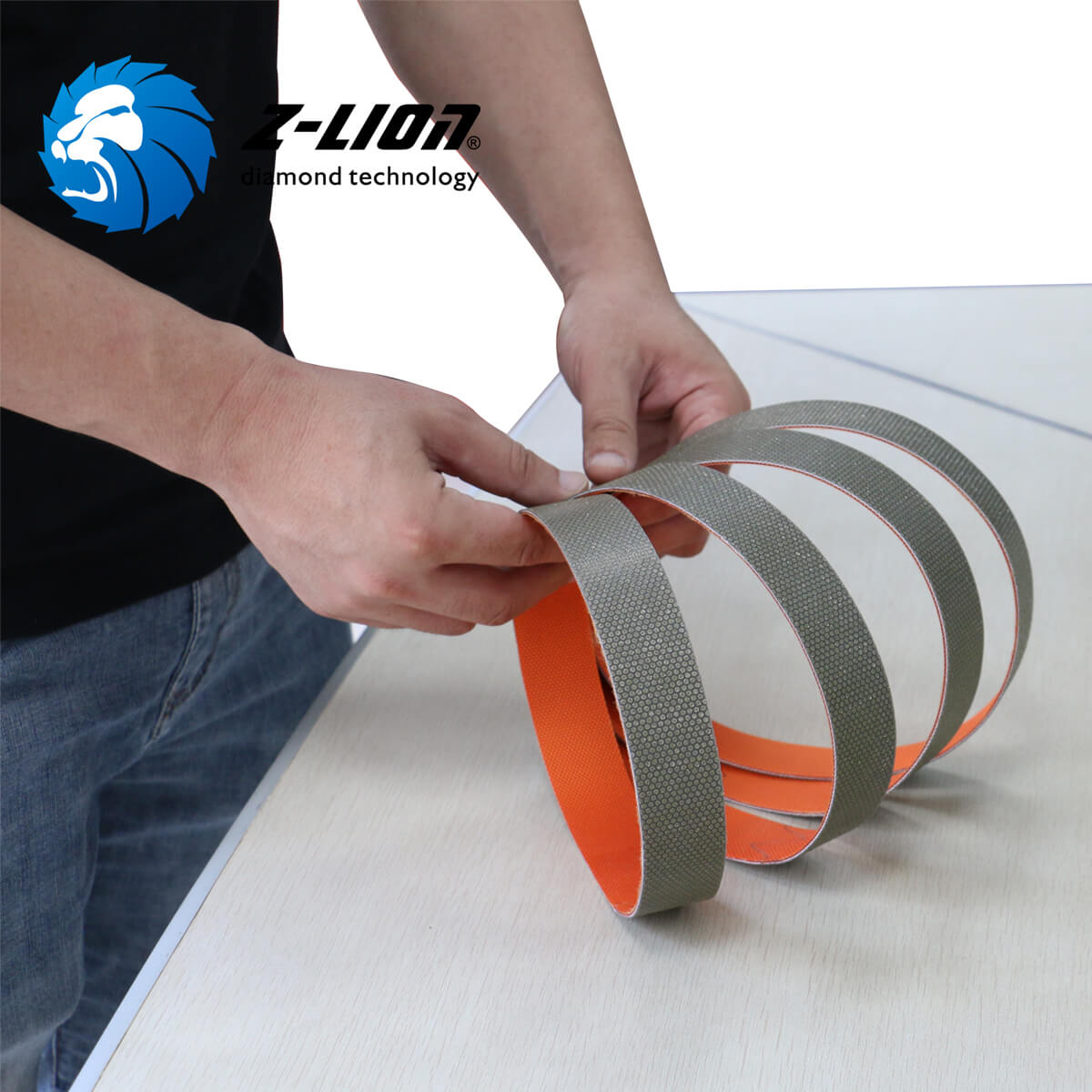
Characteristics of Electroplated Sanding Belts
Electroplated sanding belts offer a unique set of characteristics that make them highly effective for various grinding and polishing applications. These belts are designed with a nickel-plated bond agent and made from diamond powder, resulting in a superhard coated abrasive. Here are some key characteristics of electroplated sanding belts:
Hardness and Softness: Electroplated sanding belts combine the hardness of superhard materials with the softness of coated abrasives. This unique combination allows for efficient chip removal, cooling, and improved processing quality. Additionally, the softness of the belts results in low noise and minimal dust during use.
Chip Removal Capacity: The working layers of electroplated sanding belts are arranged to create larger gaps between the small units of the working layer. This design provides ample space for chip removal, enhancing the belt's flexibility and chip removal capacity.
Heat Dissipation: Unlike diamond resin belts, electroplated sanding belts have superior heat dissipation properties. The arrangement of the diamond coating and the backing material allows for efficient cooling during grinding, preventing heat accumulation that can lead to bond agent melting and reduced belt lifespan.
Versatility: Electroplated sanding belts can be used for grinding and polishing a wide range of hard and brittle materials, including stone, glass, ceramics, monocrystalline silicon, polycrystalline silicon, and hard alloys. Their versatility makes them suitable for complex surface grinding processes.
Longevity and Consistency: The electroplated diamond coating on these belts ensures long-lasting durability and consistent performance. Each individual diamond is securely held in place, minimizing the risk of peeling or premature wear.
Electroplated sanding belts provide a reliable and efficient solution for achieving precise grinding and polishing results on various materials. Their unique characteristics make them a preferred choice for professionals in industries such as stone, glass, ceramics, and automotive.
Advantages of Electroplated Sanding Belts
When it comes to sanding and polishing hard and brittle materials, electroplated sanding belts offer several advantages over other abrasive belts. These belts are made with a nickel-plated bond agent and diamond powder, providing a unique combination of hardness and flexibility. Here are some of the advantages of using electroplated sanding belts:
High Cut Rates and Increased Productivity: Electroplated sanding belts have a diamond surface that allows for high cut rates. This means that you can achieve faster stock removal and complete your sanding and polishing tasks more efficiently, saving you time and effort.
Consistent Performance: The diamond coating on electroplated sanding belts ensures consistent and predictable results. Each individual diamond is held in place by electroplating technology, which ensures long-lasting durability and eliminates belt-to-belt variation.
Versatility: These belts can be used both wet and dry, giving you flexibility in your sanding and polishing applications. Whether you need to work on stone, glass, ceramics, or other hard materials, electroplated sanding belts can handle the job.
Cooling and Chip Removal: The arrangement of the working layers on electroplated sanding belts creates larger gaps between the small units, allowing for better cooling and chip removal. This not only improves the processing quality but also reduces noise and dust during use.
Longevity: The diamond surface of electroplated sanding belts is less likely to peel off, ensuring smooth polishing and a longer lifespan. With proper care and maintenance, these belts can withstand high temperatures and provide consistent performance over time.
Ease of Use: Electroplated sanding belts are designed to be flexible and easy to use. They can be fixed to portable or stationary belt sanders, making them suitable for a wide variety of applications. Even less experienced operators can achieve consistent and effective stock removal throughout the life of the belt.
In summary, electroplated sanding belts offer high cut rates, consistent performance, versatility, cooling and chip removal capabilities, longevity, and ease of use. These advantages make them an excellent choice for sanding and polishing hard and brittle materials, providing efficient and reliable results.
Applications of Electroplated Sanding Belts
Electroplated sanding belts have a wide range of applications in various industries due to their unique characteristics and superior performance. These belts are specifically designed for grinding and polishing hard and brittle materials, making them ideal for a variety of tasks. Here are some of the key applications where electroplated sanding belts excel:
Metalworking: Electroplated sanding belts are commonly used in metalworking applications such as grinding and finishing stainless steel, aluminum, and other metal alloys. They provide excellent stock removal and produce a smooth and uniform surface finish.
Woodworking: These sanding belts are also highly effective in woodworking applications. They can be used to shape, sand, and polish wood, including hardwoods and softwoods. The electroplated diamond coating ensures precise and consistent results, making them a preferred choice for professional woodworkers.
Stone and Glass: When it comes to working with stone and glass, electroplated sanding belts offer exceptional performance. They are ideal for shaping and polishing granite, marble, glass, and other hard materials. The diamond coating provides superior cutting power and durability, allowing for precise and efficient material removal.
Automotive Industry: Electroplated sanding belts are widely used in the automotive industry for various applications. They can be used for grinding and polishing automotive parts, including engine components, body panels, and trim. The belts' high cutting rates and long-lasting performance make them a valuable tool in automotive workshops.
DIY Projects: Electroplated sanding belts are not limited to industrial applications. They are also popular among DIY enthusiasts for various projects. Whether it's refinishing furniture, restoring antiques, or working on craft projects, these belts provide the versatility and performance needed to achieve professional-looking results.
In conclusion, electroplated sanding belts offer a wide range of applications across different industries. Their unique characteristics, including high cutting rates, durability, and precision, make them an invaluable tool for professionals and DIY enthusiasts alike. Whether you're working with metal, wood, stone, or glass, these belts provide the performance and reliability needed to achieve superior results.
Selection and Usage of Electroplated Sanding Belts
When it comes to selecting and using electroplated sanding belts, there are a few key factors to consider. The right choice will ensure optimal performance and efficiency in your grinding and polishing processes.
Selecting the Right Belt
First, consider the grit size of the belt. This refers to the coarseness or fineness of the abrasive particles on the belt's surface. For rough grinding and material removal, a lower grit size like 40# or 60# is ideal. For finer finishes and polishing, higher grit sizes like 200# or 400# are more suitable.
Next, consider the belt's dimensions. The width and length should be compatible with your sanding machine to ensure a proper fit. Additionally, consider the thickness of the belt, as thicker belts tend to be more durable and long-lasting.
Using the Belt
Before using the electroplated sanding belt, ensure that the workpiece and the belt are clean and free from any debris or contaminants. This will prevent any damage to the belt and ensure a smooth and consistent grinding or polishing process.
When using the belt, apply even pressure and maintain a consistent speed. Avoid excessive pressure, as this can cause overheating and premature wear of the belt. It's also important to periodically check the belt for any signs of wear or damage and replace it as needed.
Safety Precautions
As with any abrasive tool, it's crucial to follow safety precautions when using electroplated sanding belts. Wear appropriate protective gear, such as safety glasses and gloves, to protect yourself from flying debris. Additionally, ensure that the work area is well-ventilated to prevent the buildup of dust and fumes.
In conclusion, selecting the right electroplated sanding belt and using it correctly will ensure optimal performance and longevity. By considering factors such as grit size, dimensions, and proper usage techniques, you can achieve excellent results in your grinding and polishing applications.
Maintenance and Care of Electroplated Sanding Belts
Proper maintenance and care of electroplated sanding belts are essential to ensure their longevity and optimal performance. Here are some key tips to keep in mind:
Clean the Belt Regularly: After each use, it is important to clean the sanding belt to remove any debris or residue that may have accumulated. This can be done by using a stiff brush or compressed air to gently remove the particles.
Avoid Excessive Pressure: While using the sanding belt, avoid applying excessive pressure as it can cause premature wear and tear. Instead, let the belt do the work and apply light to moderate pressure for effective sanding.
Proper Storage: When not in use, store the sanding belts in a cool, dry place to prevent moisture and humidity from affecting their performance. Ensure they are stored flat or hung to maintain their shape.
Inspect for Damage: Before each use, inspect the sanding belt for any signs of damage such as tears, fraying, or uneven wear. Replace any damaged belts to prevent accidents and ensure optimal results.
Use the Right Speed: When using a power sander, make sure to adjust the speed settings according to the manufacturer's recommendations. Using excessive speed can cause the belt to overheat and wear out quickly.
Avoid Excessive Heat: Electroplated sanding belts are designed to withstand high temperatures, but excessive heat can still cause damage. Avoid prolonged exposure to heat sources and take breaks during extended sanding sessions to prevent overheating.
Remember, proper maintenance and care of electroplated sanding belts not only prolong their lifespan but also ensure consistent and efficient sanding results. By following these guidelines, you can maximize the performance of your sanding belts and achieve professional-quality finishes.
-
Online service
-
Official wechat account

-
QQ:844389055
-
E-mail:VIP@zliontools.com
Online Message
Please feel free to give your inquiry in the form below. We will reply you in 24 hours.